Basement Electrical Safety 101: Outlets, Wiring & Lights
Learn how to deal with ungrounded basement outlets, old DIY wiring, and outdated fluorescent lights so your finished and unfinished spaces stay safe and bright.
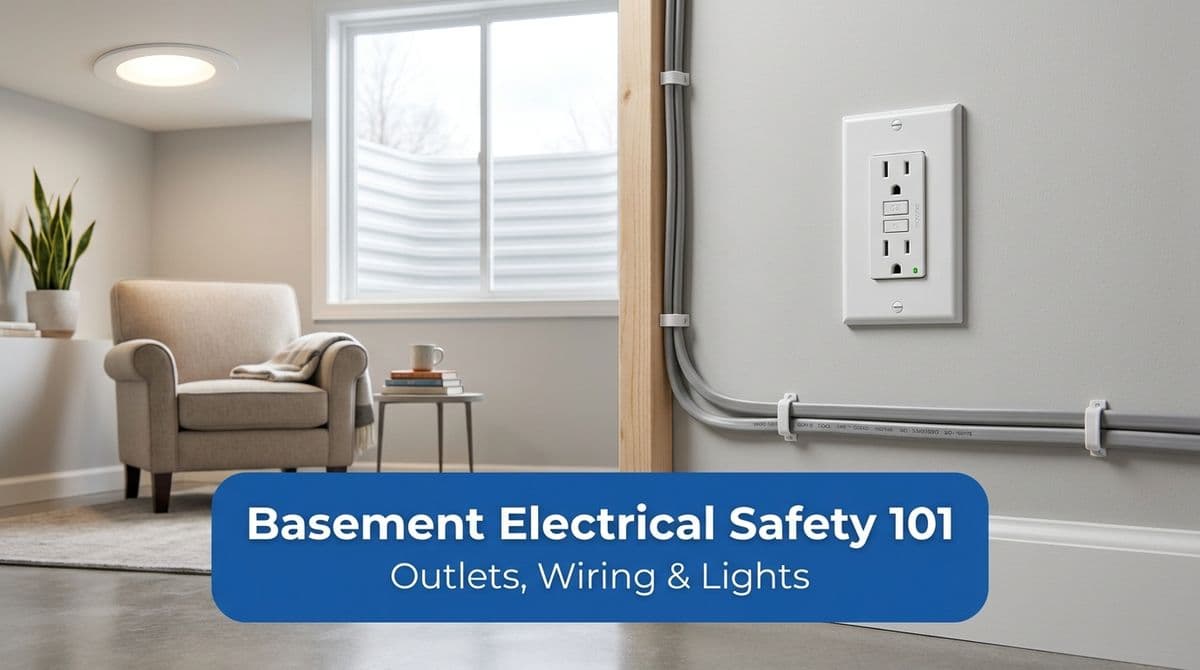
What a Basement Call Taught Us About Hidden Electrical Risks
We recently got a call from a homeowner — let’s call him Brian — who had just finished his basement. The drywall was up, the flooring looked great, the space was ready for movie nights… and then he noticed something that made his stomach drop.
The basement outlets were ungrounded, one of the ones he actually needed didn’t work at all, and the unfinished storage area was still lit by old fluorescent tube lights. On top of that, he wanted a safe outdoor outlet added in the backyard.
As we talked through his project, it struck me again how often basements hide electrical surprises: old DIY wiring, mystery outlets, and dated lighting that’s overdue for an upgrade. So I wanted to walk through the same basics we covered with Brian — a sort of “Basement Electrical Safety 101.”
Ungrounded Basement Outlets: Why They Matter
When Brian said his basement outlets were “probably ungrounded,” my first question (like on the call in your transcript) would always be: how did you find out? Common clues are:
- Three-prong outlets that test as ungrounded with a plug-in tester
- Two-prong outlets in a finished or partially finished space
- Electronics that buzz or hum when plugged in downstairs
A proper ground gives electricity a safe path if something goes wrong. Without it, a fault can energize metal parts (like tool cases or appliance housings) and increase shock and fire risk — especially in a space like a basement that may be damp.
In Brian’s case, he said, “I can technically use most of the outlets, just in an unsafe way.” That’s exactly the problem: ungrounded outlets look like they work fine, so they’re easy to ignore.
Safe Ways to Address Ungrounded Outlets
Depending on the age and condition of your wiring, we typically look at one of these options:
- Running new grounded circuits from the panel to the basement, bringing the wiring up to current code.
- Installing GFCI protection (either GFCI outlets or a GFCI breaker) where full rewiring isn’t immediately feasible, so the circuit trips quickly if there’s a ground fault.
- Correcting miswired DIY work, where someone may have swapped outlets without adding proper grounding or used old cable incorrectly.
A quick note: simply swapping a two-prong outlet for a three-prong one without a ground (or appropriate GFCI labeling) is not a safe fix and can be a code violation.
Old DIY Basement Wiring: When to Be Concerned
Brian was pretty sure there was no knob-and-tube wiring, but he suspected the basement had been wired by a past DIYer. That’s common in finished basements — and sometimes it’s done well, but often we find issues like:
- Junction boxes buried behind drywall or ceiling tiles
- Multiple wires crammed under one screw on an outlet
- Incorrect wire sizes for the breaker amperage
- Open splices (wire connections made outside of a box)
These mistakes may not show up until you trip a breaker constantly or an outlet stops working, like Brian’s one key receptacle. That dead outlet can be a symptom of a much bigger problem upstream.
How We Evaluate a Finished Basement
On our first visit for a job like this, we usually:
- Walk the entire basement and test each outlet and switch
- Map which breakers control which parts of the basement
- Open a few strategic devices (outlets, switches, junction boxes) to inspect connections
- Check the panel location and space for any needed new circuits
From there, we can tell whether you’re looking at a few targeted repairs or a more extensive rewiring. With Brian, we scheduled an early-morning visit so we’d have the whole day if it turned out to be a bigger project.
Upgrading Fluorescent Tubes to Basement LED Lighting
Brian’s unfinished storage area was lit by old fluorescent tube fixtures — another common basement scenario. They flicker, take a while to warm up, and don’t always like colder temperatures.
Modern LED options give you better light, use less energy, and often last 10+ years. In basements, that matters because you may only notice a lighting problem when you’re carrying a box down the stairs.
Simple LED Upgrade Options
When we update basement lighting, we usually recommend:
- New LED strip or wrap fixtures that replace the entire fluorescent unit for a clean, code-compliant install.
- LED shop lights for unfinished areas, especially over workbenches or laundry spaces.
- LED recessed or flush-mount fixtures in finished areas, tied into existing or new switches.
Sometimes homeowners ask about “plug-in” LED replacements for fluorescent tubes. Those can be fine in certain cases, but the wiring and ballast situation needs to be evaluated so you’re not creating a hidden hazard inside the fixture.
Don’t Forget Exterior and Convenience Outlets
The last thing Brian asked for was an exterior outlet in the backyard. That’s one of the most useful upgrades you can make while we’re already working near the panel or running new circuits through the basement.
When we add an outdoor receptacle, we make sure it’s:
- GFCI-protected (often by breaker or GFCI outlet)
- Weather-resistant and in an in-use cover to keep rain out even when something’s plugged in
- On an appropriately sized circuit for what you plan to plug in (yard tools, lighting, maybe a future hot tub)
When to Call an Electrician for Your Basement
Here’s a quick checklist. It’s time to bring in a pro if you notice:
- “Ungrounded” readings on a plug-in tester in a finished space
- Dead outlets or switches with no obvious cause
- Flickering, buzzing, or humming from fluorescent fixtures
- Warm cover plates, frequent breaker trips, or a burning smell
Basements are often where the main panel lives, like Brian’s near the washing machine, and they’re also where the oldest wiring tends to hide. That combination makes them an important place to get things right.
If you’re looking at your own basement and seeing ungrounded outlets, mystery DIY wiring, or tired old lighting, we’re happy to walk through it with you, explain your options in plain language, and put together a plan that makes the space both safer and more comfortable to use.