Why Your Dishwasher Keeps Tripping the Breaker
Dishwasher keeps tripping the breaker? Learn likely causes, simple safe checks you can do, and when it’s time to stop using it and call a licensed electrician.
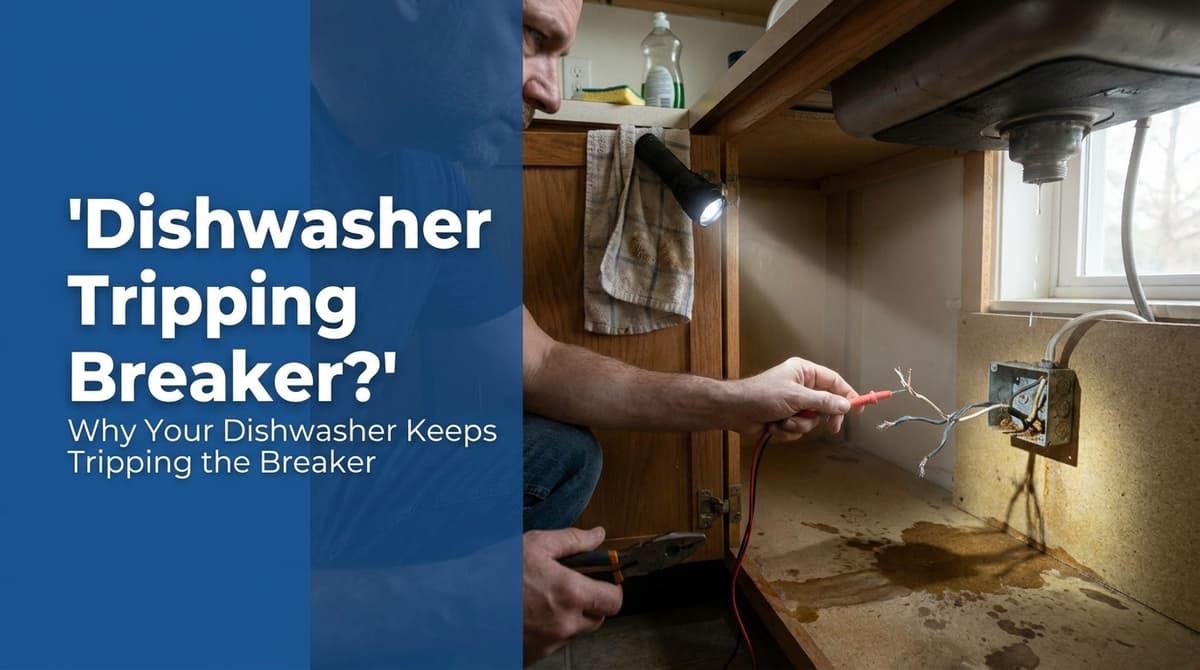
We recently got a call from a homeowner — let’s call him Ryan — who was frustrated because every time he ran his dishwasher, the breaker in his relatively new home would trip. The rest of his kitchen seemed fine, but the minute that dishwasher kicked on, click — lights out for that circuit.
On the phone, we walked Ryan through a few possibilities: water getting into wiring, a loose connection under the dishwasher, or even an issue in the electrical panel. In the end, we scheduled a diagnostic visit, because once a breaker is tripping repeatedly, it’s important to figure out why, not just keep resetting it.
Why a Breaker Trips When the Dishwasher Runs
Your breaker’s job is to shut power off when something isn’t safe. It may feel inconvenient, but a tripping breaker is a safety feature doing what it’s supposed to do.
When a dishwasher is the trigger, it usually points to one of a handful of issues:
- Overloaded circuit – The dishwasher shares a circuit with other appliances (microwave, disposer, countertop appliances), and the total draw is more than the breaker is designed to handle.
- Loose connections – Wires behind the dishwasher or in the panel can loosen over time, causing heat and nuisance tripping.
- Short circuits – Damaged wiring, pinched cables, or failing internal dishwasher components can let electricity take a “shortcut” and trip the breaker instantly.
- Water intrusion – Leaks or moisture reaching electrical connections under or behind the dishwasher can create dangerous fault paths.
- GFCI/AFCI issues – Modern kitchens often use GFCI or AFCI breakers/outlets. A ground fault or arc fault in the dishwasher circuit will cause these devices to trip even if the total load isn’t high.
Warning Signs You Shouldn’t Ignore
When we talked with Ryan, we asked a few key questions that you can also ask yourself about your own kitchen:
- How often is it tripping? Once in a blue moon during a storm is one thing. Every cycle, or multiple times per week, is a red flag.
- Is anything else on that breaker? If the microwave, disposer, and dishwasher all go dead together, they’re likely on the same circuit and may be overloading it.
- Do you notice scorch marks, heat, or odor? A warm breaker, burning smell, or discoloration around outlets or the panel is a serious sign.
- Does the breaker trip instantly or after a while? Instant tripping often points to a short circuit or ground fault. Tripping partway through the cycle can suggest overload or a failing component that heats up over time.
If you answer “yes” to any of the more serious signs — heat, burning smell, visible damage — it’s time to stop using the dishwasher and have a licensed electrician take a look.
Safe Checks Homeowners Can Do
There are a few simple checks that are generally safe for homeowners, as long as you approach them cautiously. When we guided Ryan over the phone, we kept him away from any live wiring and focused on basic observations:
1. Identify what’s on the circuit
Turn the dishwasher off, go to your electrical panel, and find the breaker that trips. Switch it off and see what in the kitchen loses power. If multiple outlets and appliances go dead, the circuit may simply be overloaded.
2. Reduce the load
On the next test run, avoid using the microwave, toaster, air fryer, or disposer while the dishwasher is running. If the breaker stops tripping when you do this, you’ve likely confirmed an overload problem.
3. Inspect around the dishwasher
Without removing panels or touching wiring, look for:
- Water on the floor near the base of the dishwasher
- Signs of leaks inside the cabinet next to the dishwasher
- Any obvious damage to the cord or plug (if it’s a plug-in model)
If you see water or damage, turn the breaker off and leave it off until it’s checked professionally.
When to Stop DIY and Call an Electrician
With Ryan, we scheduled a diagnostic visit because his breaker was tripping repeatedly and the home was newer — which usually means the wiring should be up to current code. That made us suspect a loose connection, fault, or appliance issue that needed hands-on testing.
We recommend calling a licensed electrician when:
- The breaker trips every time or nearly every time the dishwasher runs
- You notice warmth, buzzing, or any burning smell near the panel or outlets
- You suspect water is getting into electrical connections
- The breaker won’t reset or trips instantly with the dishwasher off
- You’re uncomfortable removing the dishwasher or working near wiring (a very reasonable place to draw the line)
During a diagnostic visit, we typically:
- Inspect the panel and breaker for loose lugs, heat damage, or improper sizing
- Check the dishwasher’s junction box and cable for loose, pinched, or damaged conductors
- Test for shorts, ground faults, and proper grounding
- Verify that the circuit is correctly sized and not overloaded by other kitchen loads
Sometimes the fix is as simple as tightening a connection or moving a load to a dedicated circuit. Other times, we find a failing dishwasher motor, heating element, or water leak that also needs an appliance technician or plumber involved.
Keep Safety First — Don’t Ignore a Tripping Breaker
If your dishwasher keeps tripping the breaker, think of it as your home waving a little warning flag. You don’t have to live with the frustration, but you also don’t want to keep resetting the breaker and hoping for the best.
Use the simple checks above to narrow down what might be happening, but if the problem keeps returning — or anything looks, sounds, or smells wrong — shut the dishwasher down and bring in a professional. We’d much rather help you catch a small issue early than be called after something has overheated, failed, or caused damage.