Finished Basement Electrical: Fix DIY Wiring, Heat & Lights
Finished basement wiring acting up? We share how we diagnose DIY electrical, add safe heat, and upgrade lighting so your basement is comfortable and code-compliant.
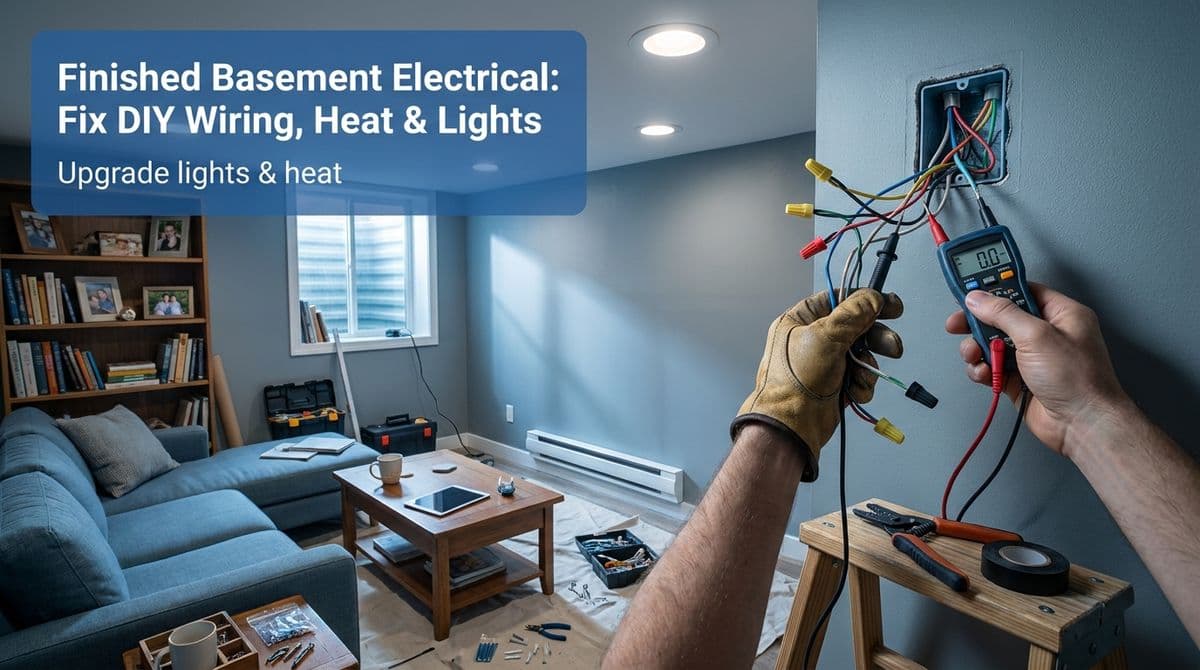
When a Finished Basement Hides Old DIY Electrical
We recently got a call from a homeowner — let’s call him Mark — who had just finished his basement and was finally ready to really use the space. There was just one problem: the outlets and lighting weren’t behaving the way they should, and the wiring behind the brand‑new drywall was clearly an old DIY job.
Mark told us one outlet in the finished area didn’t work at all, another one he wanted to use wasn’t powered, and he was hoping to plug in a small electric “furnace” (really a space heater) down there. He also had older fluorescent lights in the unfinished part of the basement that he wanted converted to simple LED lighting. On top of that, he was thinking ahead about adding an outdoor outlet near where his panel sits.
As soon as we heard “finished basement over old DIY wiring” and “space heater on that outlet,” our ears perked up. That’s exactly the kind of situation where we want to get eyes on everything before anyone relies on those circuits. So in this post, we’ll walk you through how we approach projects like Mark’s and what we recommend if your finished basement has mystery wiring, space heaters, and outdated lighting.
How We Diagnose DIY Wiring Problems in a Finished Basement
When we come out for a diagnostic visit in a finished basement, our first goal is to figure out what you actually have before we talk about fixes or upgrades. With Mark, we knew his basement was already drywalled and painted, so we planned for careful, minimal investigation.
On site, our licensed electricians typically:
- Test every affected outlet and switch with professional meters, not just plug-in testers, so we can see if you’re missing a neutral, ground, or have reversed polarity.
- Map which breaker feeds which outlets and lights so we know what’s tied together and how heavily each circuit is loaded.
- Check grounding and bonding at the panel and at the receptacles, especially in basements that may have been wired decades ago.
- Inspect any accessible junction boxes in mechanical rooms, drop ceilings, or unfinished areas to see how the DIY work was done.
If we see signs of unsafe work — for example, hidden junction boxes, mixed wire sizes, or ungrounded cables — we’ll talk with you about where we might need to open small sections of drywall to correct it. We always try to keep those openings as small and strategic as possible so you’re not redoing your whole finish job.
Fixing Common Basement DIY Wiring Mistakes
Once we know what we’re dealing with, we put together a plan. In finished basements like Mark’s, we often find the same kinds of DIY issues:
- Dead or intermittent outlets because a back-stabbed connection came loose or a splice was made outside of a junction box.
- No equipment grounding at the receptacle, even though the basement now has modern finishes and furniture.
- Multiple rooms daisy-chained to one undersized circuit that was never meant to support today’s loads.
Our typical fix in a situation like this is to:
- Re-terminate or replace problem outlets with properly wired, grounded receptacles.
- Locate and correct bad splices, pulling them into code-compliant junction boxes with covers.
- Rewire short runs where we see mixed or damaged cable, tying them neatly into the existing system.
- Label breakers and circuits clearly so you know exactly what serves your finished basement.
Sometimes we discover the original DIY work is so questionable that it makes more sense for us to run a new, clean circuit for the problem area rather than trying to patch a dozen old mistakes. When that happens, we walk you through pros, cons, and costs before we touch anything.
Adding Safe Heat: What We Do Before You Plug in a Space Heater
Mark mentioned he wanted to plug a “little mini furnace” into one of the basement outlets and wondered if it should be on its own breaker. We hear that a lot, and we always take it seriously, because space heaters are one of the top causes of overloaded circuits in finished basements.
Here’s how we typically handle it for our customers:
- We check the heater’s wattage. Many space heaters are 1,500 watts. On a 15‑amp circuit (1,800 watts max), that leaves very little room for anything else.
- We look at what else is on that circuit. If lights, TVs, game systems, or a mini fridge share that run, we do not want everything stacked on one breaker.
- We measure the actual load when possible, so we’re not guessing.
Based on what we find, we might recommend one of two paths:
- Dedicated circuit for the heater: We run a new circuit from your panel to a single or pair of outlets designed for high‑draw loads. This keeps the heater from tripping breakers or overheating wiring.
- Upgrade your heating approach: In some homes, we talk through adding a permanent, hard‑wired electric heater or using a different heating strategy that spreads the load more safely.
Either way, we never want you relying on mystery DIY wiring for high‑wattage devices. If you’re planning to run a space heater regularly in a finished basement, we strongly recommend having us evaluate that circuit and, if needed, install a dedicated line.
Upgrading Basement Lighting: From Fluorescent Tubes to LED
Mark also asked if we could convert the old fluorescent tube lights in his unfinished areas to “normal LED bulbs.” That’s something we help homeowners with all the time, especially in basements where fixtures hang low and people bump their heads.
Depending on your space and budget, we usually look at three options:
- Replace the entire fixture with a modern LED shop light or strip. This is simple, bright, and efficient.
- Install low-profile LED disks or flat trims directly to junction boxes to keep fixtures tight to joists and out of the way.
- Retrofit existing fixtures with compatible LED tubes, if the housing is in good shape and makes sense to keep.
When we’re already in the basement for diagnostic work, it’s usually cost‑effective for us to take care of lighting upgrades at the same time. We can re-use existing wiring runs where they’re safe and up to code, then give you brighter, more efficient light with less maintenance.
Planning Ahead: Adding Outdoor Outlets from a Basement Panel
One smart thing Mark brought up was adding an outdoor outlet on the same side of the house where his panel is located. Because his electrical panel sits in the basement near the desired spot, that’s a project we can usually tackle very cleanly.
On these jobs, we typically:
- Confirm panel capacity to see whether we can add a new circuit or must work from an existing one.
- Install an exterior‑rated box and in‑use cover so the outlet is protected from weather.
- Use GFCI protection (either at the breaker or the receptacle) to keep the outdoor circuit safe.
- Seal penetrations properly where we exit the basement wall so you don’t end up with drafts or moisture issues.
Because we’re already familiar with your basement wiring from the diagnostic, it’s easy for us to suggest the most efficient way to route that outdoor circuit.
When You Should Call Us About Your Finished Basement Wiring
If your situation sounds anything like Mark’s, we recommend having us take a look if:
- You have dead or unreliable outlets in a finished basement.
- You’re planning to run a space heater or other high‑draw appliance down there.
- There’s evidence of old DIY wiring behind new drywall or ceiling finishes.
- You want to upgrade old fluorescent lights to modern LED fixtures.
- You’re thinking about adding outdoor outlets near the basement or panel.
In Mark’s case, we started with a focused diagnostic visit, then mapped out fixes and upgrades based on what we saw. We can do the same for you: figure out what you have, make it safe, and then help you get the comfortable, well‑lit basement you originally envisioned — without worrying about what’s hiding in the walls.