Safe, Code-Compliant Hot Tub Electrical Installs
Thinking about a new hot tub? Learn how permits, trenching depth, panel capacity, and a licensed electrician keep your spa safe and code-compliant.
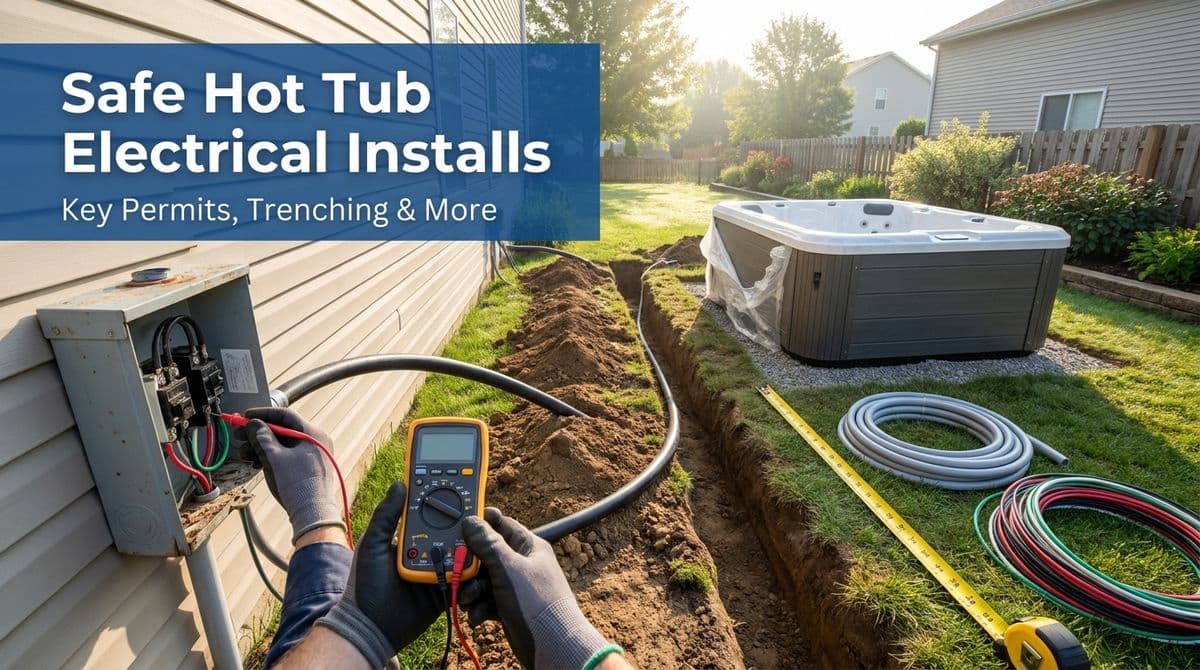
“Can We Just Run It 6 Inches Deep?” – A Real Hot Tub Call
We recently got a call from a homeowner — let’s call her Melissa — who was excited about a new backyard hot tub. The tub was ordered, delivery was scheduled, and she thought she was almost ready to relax.
Then she learned the electrician recommended by the spa store wasn’t actually licensed.
He planned to run the hot tub wiring in conduit only about six inches deep along the foundation. Melissa’s husband had read that electrical lines usually need to be much deeper, closer to 18 inches, and they started wondering what else might not be up to code — permits, panel capacity, inspections, the whole deal.
That conversation is exactly why we want to walk you through how safe hot tub electrical installations are supposed to work: permits, trenching depth, panel capacity, and why using a licensed electrician isn’t optional if you care about safety and resale value.
Permits for Hot Tub Electrical Work: Why They Matter
During our call, we shared with Melissa that she was absolutely right to be asking about permits. In most cities, you don’t pull a permit for a “hot tub” by name; you pull it for a new electrical circuit over a certain amperage (often 50 amps or more).
Here’s how permits typically work for hot tub wiring:
- Any new circuit run by a licensed electrician technically requires a permit.
- The permit is usually for a new 240V circuit of a specific amperage, not for the tub itself.
- After the work is done, the city or local authority inspects the installation.
- That inspection and approval become part of the home’s public record.
For homeowners, that record is a big deal. When you go to sell your home, inspectors and buyers can see that the hot tub circuit was installed by a licensed electrician and passed inspection. No awkward questions, no scrambling to prove it was done correctly.
We always handle the permit and inspection process for our customers. You shouldn’t have to wrestle with the city’s online permit system or wonder which box to check — that’s what you hire us for.
Trenching and Conduit: How Deep Does Hot Tub Wiring Need to Be?
Melissa’s biggest red flag was that the unlicensed installer planned to run the conduit only six inches deep. That might sound easier and cheaper, but it is not how a permanent, code-compliant hot tub circuit is usually installed.
While exact requirements vary by local code and soil conditions, these are the basic concepts we explained:
- Underground wiring depth: For most permanent outdoor electrical runs, you’re typically looking at around 18 inches of cover for buried conduit. Local codes and soil type can adjust that slightly, but 6 inches is almost never acceptable for a permanent installation.
- Conduit type: We generally use rigid PVC or metal conduit rated for underground use to protect the conductors from moisture and physical damage.
- Along the foundation: Running along the foundation can be a good option, but it still has to meet minimum burial depths and separation from other utilities.
- Obstacles: Existing patios or sidewalks may require trenching through or directional boring underneath instead of shallow, exposed runs that are easier to damage.
We also walk the route on-site to see if there are alternatives. In some homes, we can run the circuit through the basement or crawlspace and exit near the tub location, reducing the amount of exterior trenching.
Panel Capacity: Can Your Electrical System Handle a Hot Tub?
Melissa mentioned her home was built in the early 2000s, and we told her what we see on homes from that era: usually the main panel has enough capacity for a hot tub circuit, but we always confirm.
When we evaluate panel capacity, we look at:
- Available breaker spaces: A hot tub often needs a 240V, 50A–60A double-pole breaker, so the panel needs two open spaces side by side.
- Overall load: We consider what else is on the system — electric range, dryer, HVAC, EV charger, etc. A panel that’s technically not “full” may still be overloaded in practice.
- Panel condition: Rust, overheating marks, outdated or recalled panels and breakers can all be safety issues.
On older homes with small or crowded panels, we sometimes have to recommend a subpanel or panel upgrade before adding a hot tub. It’s not the news anyone wants to hear, but it’s far cheaper than dealing with an electrical fire or nuisance tripping every time the tub heats up.
Why a Licensed Electrician Is Non‑Negotiable
One thing we stressed to Melissa is that being “experienced” doesn’t replace being licensed and insured. The unlicensed installer she spoke with had “done hundreds of tubs,” but couldn’t pull a permit or have his work inspected under his own license.
Here’s what you risk with unlicensed hot tub wiring:
- No permits or inspections: The work is invisible to the city until something goes wrong.
- Insurance headaches: If there’s an electrical fire or injury, your insurer may take a very hard look at unpermitted work.
- Real safety risks: We do a lot of fire restoration work, and in our experience, the majority of house fires we see are electrical in origin, often tied to DIY or unpermitted work.
- Resale issues: Home inspectors are trained to spot non‑standard wiring and missing permits. That can kill a sale or force last‑minute repairs.
A licensed electrician is required to:
- Follow the National Electrical Code and local amendments.
- Carry insurance to protect you and your property.
- Pull permits and schedule inspections under their license.
In other words, you’re not just paying for someone to “hook up a tub.” You’re paying for accountability, documentation, and long‑term safety.
What Affects the Cost of a Hot Tub Electrical Install?
Every home is different, which is why we offered Melissa a free on‑site estimate. We don’t quote blind over the phone because too many factors can change the price. Some of the biggest cost drivers are:
- Distance from panel to tub: A 15‑foot run is very different from 80 feet around the house.
- Route complexity: Straight shot through an unfinished basement vs. finished ceilings, tight crawlspaces, or multiple turns.
- Trenching needs: Soft lawn vs. cutting through concrete or needing directional boring.
- Panel upgrades: If your existing panel can’t safely handle the new load, that adds scope.
- Local code requirements: Some jurisdictions have extra rules for GFCI disconnects, clearances from doors and windows, or bonding of nearby metal parts.
We walk you through these items before we start, so there are no surprises. While we can’t post exact local prices here, we can help you understand where your project will likely land once we see the site.
What to Expect on Installation Day
Homeowners often ask what the actual day of installation looks like. Here’s the general flow we described to Melissa:
- Walkthrough and confirmation: We confirm the tub location, route, and disconnect placement with you one more time.
- Panel work: We shut off power as needed, install the new breaker, and start running cable from the panel.
- Routing and trenching: We run wire through the house or outside in conduit, trench where needed, and set the disconnect box at the proper distance from the tub.
- Connections and testing: We make final terminations, verify correct voltage, test GFCI protection, and make sure all safety devices function properly.
- Clean‑up and inspection scheduling: We backfill trenches, tidy the work area, and schedule or coordinate the electrical inspection with the city.
Once the inspector signs off and the spa company finishes any final start‑up steps, you’re ready to enjoy the tub with confidence.
DIY & Unpermitted Tubs: Common Problems We Fix
Because we also do a lot of repair and restoration work, we regularly see hot tub wiring that makes us cringe. Some of the most common issues we correct are:
- Improper burial depth or unprotected cables laid directly on the ground.
- No GFCI protection or the wrong type of breaker and disconnect.
- Undersized wire that overheats when the tub draws full load.
- Improper bonding of nearby metal handrails, fences, or equipment.
- Overloaded or double‑tapped breakers in panels that were already maxed out.
Most of these issues could have been avoided with a proper permit and a licensed electrician from the start.
Your Pre‑Call Checklist for a Safe Hot Tub Install
If you’re planning a new hot tub, here’s a simple checklist you can run through before you call us (or any licensed electrician):
- Have a general location picked out for the tub (and make sure it meets the spa manufacturer’s clearance recommendations).
- Know roughly where your main electrical panel is (garage, basement, utility room, etc.).
- Ask the spa dealer for the tub’s electrical specs (voltage, amperage, and wiring requirements).
- Think about your preferred wire route (through the house vs. around the exterior, through lawn vs. under a patio).
- Plan for permit and inspection as part of the project — don’t skip this step.
- Verify that the electrician you’re calling is licensed and insured, and willing to show documentation.
When Melissa called us, she was feeling overwhelmed enough that she almost canceled her hot tub order. By the end of our conversation, she had a clear plan: we would come out for a free on‑site estimate, confirm panel capacity, design a code‑compliant route with proper trenching, pull the permit, and schedule inspection. In other words, we’d handle the details so her family could safely enjoy their new spa for years to come.
If you’re in the same boat, wondering whether that “simple hookup” is really that simple, it’s worth doing it the right way the first time. Your home, your safety, and your future buyers will thank you.