Knob and Tube Wiring in Older Homes: Buyer’s Guide Before Closing
Buying an older home with knob and tube wiring? Learn how we inspect it, what it means for safety and insurance, and how to use our report before you close.
Buying an Older Home With Knob and Tube? Read This Before You Close
We recently got a call from a homebuyer — let’s call her Emily — who was under contract on a charming 1920s house. During her walk-through, she spotted some two-prong outlets on the main floor and what looked like old cloth-covered wiring running along the basement ceiling. Her home inspector flagged “possible knob and tube wiring” and recommended an electrical inspection before she moved forward.
That’s when Emily’s realtor told her to call us. She wanted to know: “Is this safe? Will insurance cover it? And can I use this in negotiations before closing?”
If you’re in Emily’s shoes, here’s how we approach knob and tube (K&T) wiring inspections, what we look for, and how you can use the results to protect your budget and your safety.
How We Spot Possible Knob and Tube Wiring
Often, buyers like Emily first notice K&T the same way she did: during a quick tour, not a deep inspection. When we’re called out for a pre-purchase visit, we start by walking the home with the buyer and their agent and looking for the classic clues.
Here are the signs we usually point out together:
- Two-prong outlets (no ground slot) on older walls, especially in living rooms and bedrooms.
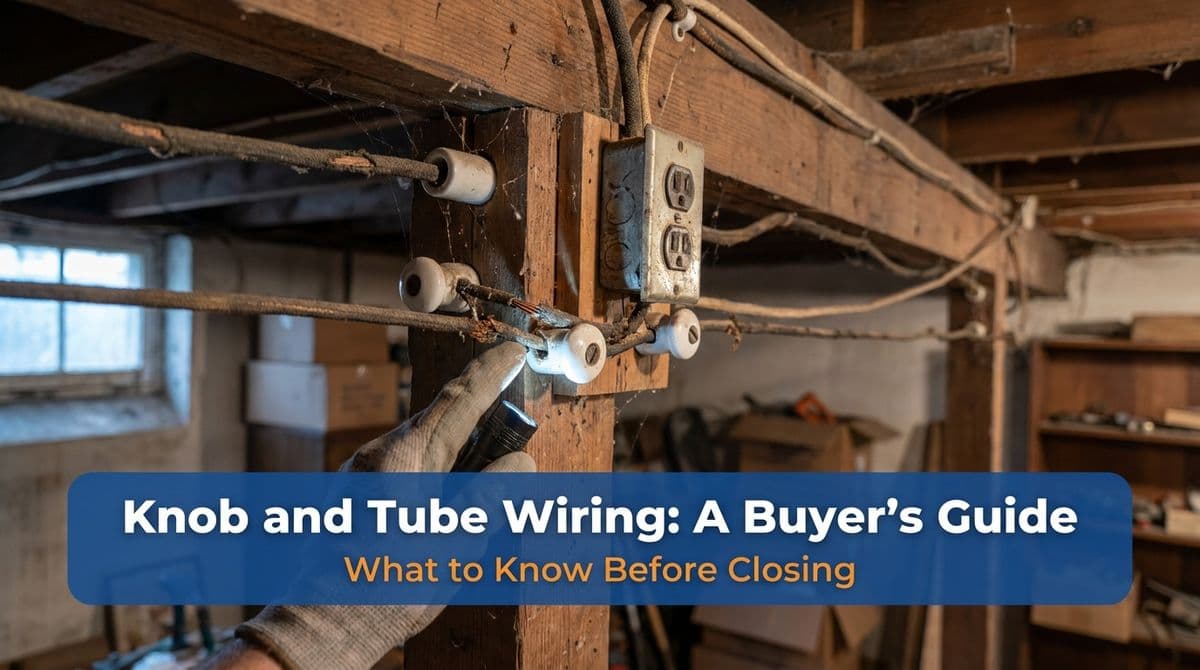
- Porcelain “knobs” and “tubes” supporting cloth-covered wires along exposed basement or attic framing.
- Mixed wiring types — modern plastic-sheathed cable in some areas, but older cloth wiring appearing in others.
- Very limited outlets per room or extension cords and power strips everywhere (a symptom of an outdated system).
We always explain that these are indicators, not proof. Sometimes a house has been partially updated, or previous owners have hidden K&T behind newer fixtures. That’s why a focused electrical inspection is so important before you negotiate or close.
What We Include in a Knob and Tube Electrical Inspection
When a buyer like Emily schedules us for a pre-purchase inspection, we structure the visit so they walk away with clear, actionable information — not a pile of confusing notes.
Here’s what we typically include in a thorough K&T evaluation:
- Visual tracing of circuits in the basement, attic, and accessible wall cavities to see where K&T starts and ends.
- Outlet and switch testing to check for proper polarity, grounding, and signs of overheating or loose connections.
- Panel and breaker review to see how old circuits are protected and whether any unsafe modifications have been made.
- Load and usage discussion — we talk with you about how you plan to use the home (EV charger, home office, window ACs, etc.).
- Documented findings with photos, descriptions of where K&T is present, and a prioritized list of safety concerns.
By the end, we’re able to tell you whether the existing K&T is relatively intact and low-risk if left undisturbed, or whether it’s brittle, altered, covered with insulation, or overloaded — all red flags we want you to know about before you sign.
Safety and Insurance Concerns We Warn Buyers About
Once we’ve mapped out what’s there, we sit down with buyers and go over the two big questions: “Is it safe?” and “Will my insurance company care?”
Here are the core points we usually cover:
- Age and condition matter: Original K&T that’s untouched and in open air can sometimes be serviceable, but brittle insulation, exposed splices, or buried-in-insulation wiring raise the risk significantly.
- No grounding: K&T systems were installed without a ground wire, which is not ideal for modern electronics, surge protection, or certain appliances.
- DIY modifications: We routinely find unsafe add-ons where someone tied modern wiring into old circuits. That’s often more dangerous than the original K&T.
- Insurance limitations: Many insurers either charge higher premiums, exclude certain coverages, or require K&T to be removed within a set timeframe. We can document our findings in a way you can share with your insurer.
We’re always candid: we don’t want you scared out of a good house, but we also don’t want you surprised by a major electrical project the week after closing.
Upgrade and Rewire Options We Walk Through With Buyers
After we explain what we found, we move straight into options and realistic costs. Our goal is to give you a clear plan, not just a list of problems.
Depending on the house and your budget, we usually discuss:
- Targeted safety fixes: Replacing the most at-risk K&T sections, correcting bad splices, and adding GFCI protection in key locations as an interim step.
- Partial rewires: Prioritizing kitchens, bathrooms, and heavily used rooms first, then planning phased rewiring for low-use spaces over a few years.
- Full rewire: Removing or abandoning K&T, installing modern grounded circuits, and upgrading the panel if needed. We outline typical timelines, disruption, and ballpark pricing.
We itemize these options in our write-up so you and your agent can see the difference between “must-do for safety” and “nice-to-have for convenience and resale.”
Using Our Report in Negotiations Before You Close
For buyers under contract, the inspection report isn’t just technical information — it’s a negotiating tool. We regularly help clients and their agents use our findings in a few ways.
Here’s how we often see our reports used:
- Price reduction request based on a written estimate for partial or full rewiring.
- Seller-paid repairs where we specify exactly which circuits or rooms should be addressed prior to closing.
- Closing credits so you can choose your own contractor and timeline after you own the home.
- Insurance compliance — showing the insurer you have a professional plan to remediate K&T within a certain time frame.
We’re happy to coordinate with your agent, answer follow-up questions from the seller’s side, and revise estimates if the scope changes. The whole point is to give you leverage and clarity while you still have options.
Thinking About an Older Home With Knob and Tube?
If you’re buying an older home and you’ve spotted two-prong outlets, old basement wiring, or “possible K&T” on the inspection report, don’t panic — but don’t ignore it either.
Bring in a licensed electrician who works with older homes regularly. We’ll help you understand exactly what’s in the walls, what it means for your safety and insurance, and how to turn that information into smart negotiations before you close.
The right information at the right time can turn a scary line item on an inspection report into a manageable project — and maybe even a better deal on a home you love.