Should You Move Your Electrical Service to a New Garage?
Thinking about moving your home’s electrical service to a new garage? We explain pros, cons, underground options, utility costs, and planning for future 220V loads.
Why Homeowners Ask About Moving Service to a Garage
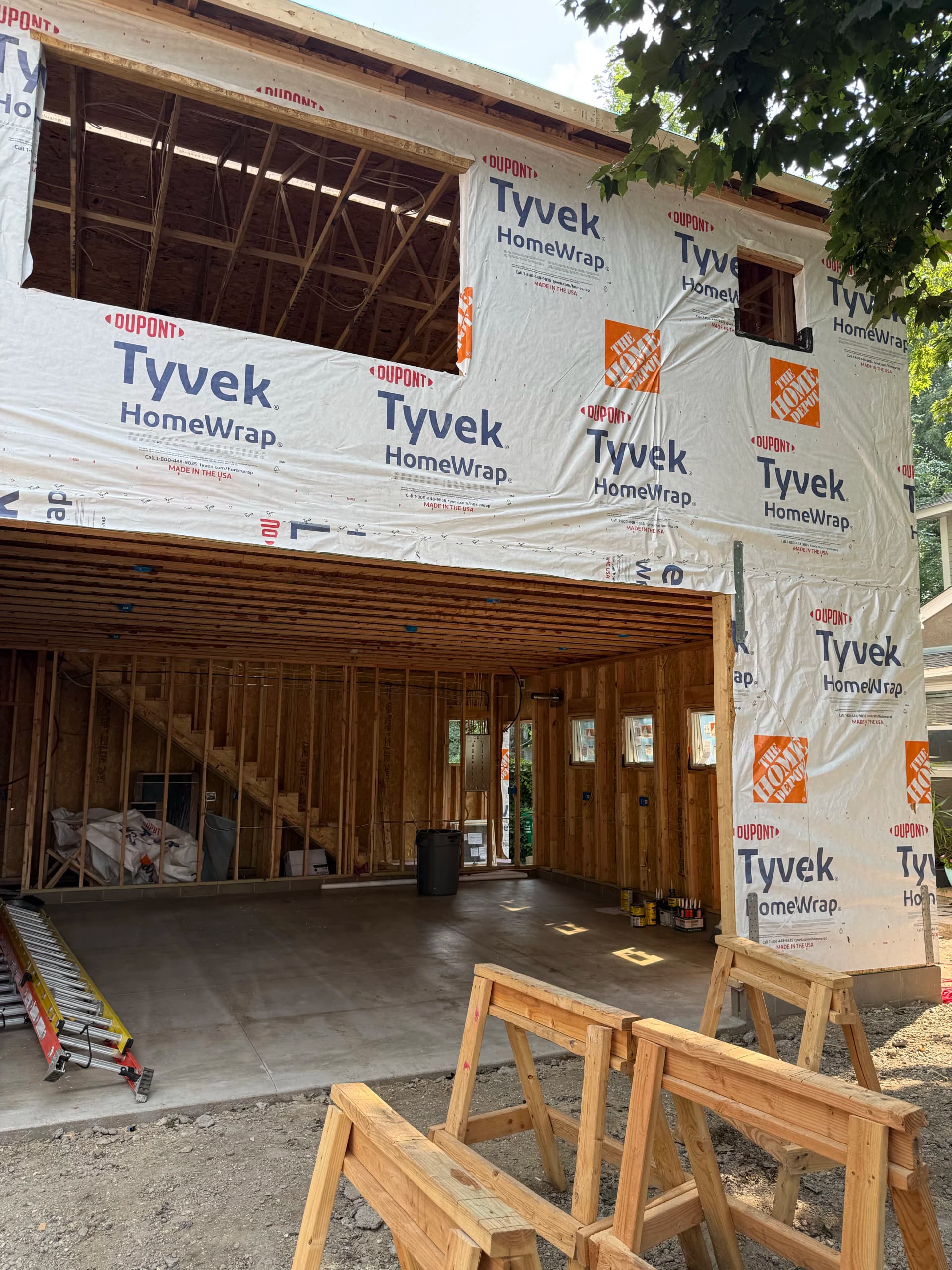
We recently got a call from a homeowner — we’ll call him Jason — who was getting a new detached garage built in his backyard. His existing electrical service came from a pole in the alley to the house, and he was wondering if it made sense to move the meter and main service over to the new garage instead.
Jason’s big questions were:
- “Can we move the service to the garage and then just feed the house from there?”
- “Is it worth trying to get the power company to bury the lines while we’re at it?”
- “If we’re doing this anyway, should we plan for a 220V outlet for a future EV or tools?”
Those are great questions for anyone adding a new garage or shop, so we thought we’d walk through the pros, cons, costs, and what to expect when you move your home’s electrical service to a new garage and consider burying the power lines.
What It Means to Move Service to a Detached Garage
When we talk about “moving the service,” we mean relocating the meter and main electrical panel so they’re mounted on the new garage instead of on the house. The utility’s wires (overhead or underground) then land on the garage, and from there we “backfeed” the house.
In most setups we design, the garage becomes the service entrance with a main breaker panel (often 200 amps), and the house gets fed by a large breaker in that panel, using an underground or overhead feeder between the two buildings.
How Backfeeding the House Works
“Backfeeding” sounds complicated, but here’s what it really means in this context:
- The utility feeds power to the garage panel first.
- Inside that panel, we install a large breaker (for example, 100–200 amps) that feeds a cable running to a subpanel in the house.
- The house panel is now a subpanel, not the main service, and it gets its power from the garage panel.
This is a perfectly normal, code-compliant setup if it’s designed and installed correctly. It can work very well when the new garage is closer to the utility pole or transformer than the house is.
Pros of Moving Your Electrical Service to the Garage
When we walk homeowners through this option, a few advantages come up again and again:
- Cleaner layout for new builds: If you’re already trenching and pouring a new foundation, it can be efficient to bring the main service to the garage and feed the house from there.
- Easier future upgrades: Many people want 220V for an EV charger, welder, air compressor, or woodworking tools. Making the garage the main panel can simplify adding those circuits later.
- Opportunity to upsize service: If your house currently has a 60A or 100A service, a new garage project is a common time to upgrade to a 200A service.
- Potential to clean up overhead wires: If the new garage is closer to the pole or transformer, it’s sometimes the perfect time to negotiate with the utility about burying their portion of the service.
Cons and Complications to Consider
Moving the service isn’t always the right move. Here are some drawbacks we walk through with customers:
- Higher up-front cost: You’re not just wiring a garage; you’re doing a full service relocation. That means coordination with the utility, permits, inspections, and sometimes structural work.
- Extra feeder to the house: We have to run a properly sized cable between the garage and house. If there’s a concrete patio, driveway, or landscaping in the way, trenching can add cost.
- Panel space and load calculations: We need to confirm the new service and feeder can safely handle both the house and the garage loads (especially important if you’re adding EV charging or heavy tools).
- Outage coordination: Your power will be off for part of the work and during the cut-over. We plan this carefully, but it’s still a disruption.
Overhead vs. Underground Service to the Garage
In Jason’s case, the existing service was an overhead line from the pole to the house, and the new garage was going to sit much closer to that pole. That opened up two main options:
- Overhead to the new garage: The utility runs new overhead wires to the garage instead of the house.
- Underground to the new garage: The pole connection stays where it is, but the final leg from the pole to the garage goes underground.
Underground is obviously nicer-looking and better protected from storms and tree branches, but it can be more expensive. However, there are times when the utility may cover some or all of the underground work, which brings us to the next point.
When the Utility Might Pay to Bury Your Lines
Every utility has its own policies, but here are some general scenarios we see where they may help with the cost of burying the service:
- The new garage is very close to the pole or transformer, making the underground run short and straightforward.
- The utility is already planning upgrades in your area and can roll your project into a larger job.
- You’re eliminating an unsafe or problematic existing overhead route (for example, over a roof or through heavy tree cover).
The only way to get a real answer is to ask your power company early. We often help homeowners by providing a layout, load information, and a clear description of the project so the utility can give a definitive yes/no and cost breakdown.
Permits, Inspections, and Planning the Work
A service relocation is never just “move the wires and call it good.” There are several boxes we have to check to keep everything safe and legal:
- Electrical permits: Your city or county will almost always require a permit for moving the meter, upgrading service size, or adding a new feeder between buildings.
- Inspections: An inspector will verify grounding, conductor sizes, breaker ratings, panel locations, and that the house panel is correctly converted to a subpanel.
- Utility coordination: We schedule disconnects and reconnects with your power company so the work is done safely and your outage is as short as possible.
We usually build a timeline that lines up with your garage builder’s schedule, trenching, and concrete work so we can get everything in the ground before it’s covered up.
Planning for Future 220V Loads and EV Charging
One of the biggest reasons homeowners choose to move service to a new garage is future 220V needs. When we’re designing the new layout, we like to ask:
- Do you plan to install an EV charger in the next 5–10 years?
- Do you use or plan to use welders, large air compressors, or woodworking tools?
- Could you see the garage becoming a heated/cooled shop with its own HVAC someday?
If the answer to any of those is “maybe,” it often makes sense to:
- Install at least a 200A main panel at the garage.
- Run a properly sized feeder to the house so neither building is starved for power.
- Leave extra spaces in the panel and consider running conduit instead of direct-burial cable so we can pull in additional circuits later without retrenching.
Is Moving Your Service to the Garage Right for You?
For Jason, the new garage’s location and his plans for future 220V loads made moving the service to the garage a smart option to explore, especially if the utility would cover some of the cost to bury the line. For another homeowner, it might make more sense to leave the service on the house and simply run a feeder out to the garage.
If you’re planning a new detached garage or shop and wondering which route is best, we’re happy to look at your layout, talk through your long-term plans, and put together a clear, code-compliant plan so you know exactly what you’re getting into — before any dirt gets moved.