Do I Need an Electrician for My Radon Mitigation Fan?
Unsure if you need an electrician for your radon mitigation fan? We explain safe wiring, switch placement, permits, and code so your system runs safely 24/7.
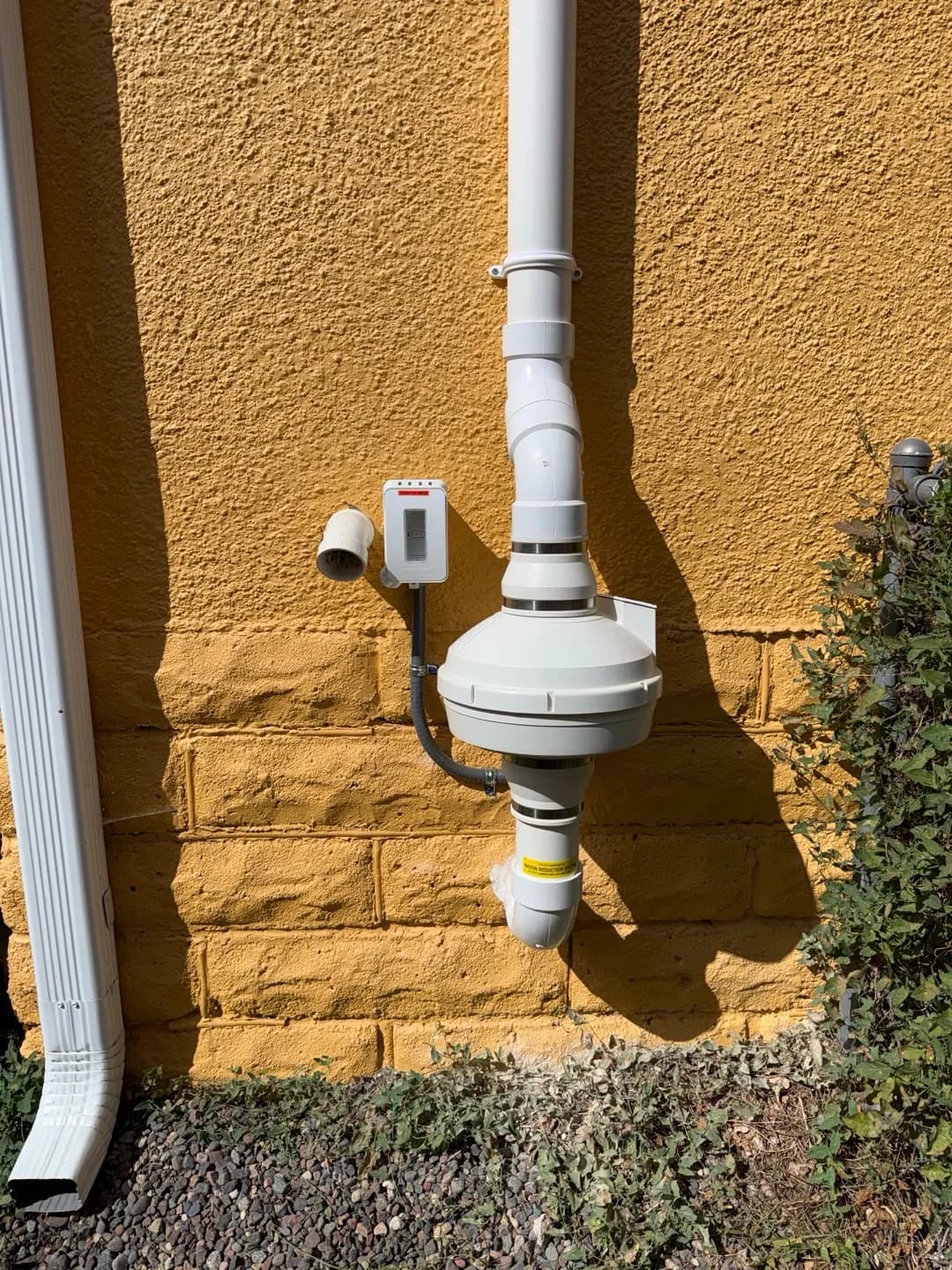
“Do I Really Need an Electrician for This Fan?”
We recently got a call from a homeowner — let's call him Mark — who was right in the middle of moving into his new place. A radon mitigation company was installing his system, but their electrician had a scheduling issue and couldn’t come out to wire the radon fan and exterior switch.
Mark was standing in his driveway, watching the crew install the piping on the outside wall near his AC unit, when he called us. The fan was going on the exterior garage wall, and he needed it hardwired with an exterior switch the same day so he could move in on schedule. His big question (which we hear a lot) was basically:
- “Do I really need an electrician for this?”
- “Can’t the radon company or even I just plug the fan in?”
- “What does code actually require for a radon fan?”
We walked Mark through what’s required and got him scheduled that afternoon. In this post, we’ll walk you through the same details we shared with him: when you need an electrician, what safe wiring looks like, where that switch should go, and how permits and inspections come into play.
Why a Radon Fan Isn’t “Just Another Fan”
Radon mitigation fans run 24/7. They’re part of a life-safety system designed to reduce your family’s exposure to radioactive gas. That’s a very different situation from a bathroom fan you use for 20 minutes.
Here’s why we almost always recommend a licensed electrician for radon fan wiring:
- Continuous operation: The fan runs nonstop, so any wiring or connection issue is under stress 24 hours a day.
- Outdoor exposure: Most fans are outdoors or in unconditioned spaces, so weatherproof boxes, in-use covers, and correct cable types are critical.
- Code & permits: Many jurisdictions treat radon systems as life-safety installations, which means permits, inspections, and documentation.
- Real estate value: Home inspectors and buyers often ask for proof the system was installed to code by licensed pros.
With Mark, the radon company handled the piping and fan placement. We handled the dedicated electrical feed, exterior switch, permit, and inspection so everything would pass code and keep running safely long term.
How We Power and Control a Radon Mitigation Fan
On Mark’s home, the fan was mounted on the exterior garage wall, next to the AC unit and other utilities. When he described the setup, we asked our usual question: “If we were standing on the inside of the wall where the fan is, what room would we be in?” For him, that would place us in the garage, which made it relatively straightforward to get power to the fan location.
Here’s the general process we follow for a typical hardwired radon fan with an exterior switch:
- 1. Identify the power source. We determine if we’ll feed the fan from the main panel or a nearby circuit (subject to load calculations). Many fans are best on a dedicated 15A circuit.
- 2. Run properly rated cable or conduit. For outdoor runs, we use wiring methods rated for exterior use and protect them with conduit as required by code.
- 3. Install a weatherproof disconnect or switch. An exterior switch or disconnect near the fan allows service technicians to safely shut the unit off.
- 4. Make weather-tight connections. We use weatherproof junction boxes, gaskets, and fittings to keep moisture out of electrical components.
- 5. Label and test. We label the circuit as “Radon Fan,” confirm proper operation, and verify the fan runs continuously.
For Mark, we also handled the permit and inspection as part of the project cost, so he didn’t have to chase paperwork while juggling a move.
Where Should the Radon Fan Switch or Disconnect Be?
Homeowners often ask where the switch “has” to go. The exact requirement can vary by local code and inspector, but there are some common guidelines we follow:
- Within sight of the fan: A technician working on the fan should be able to see and operate the switch or disconnect.
- Protected from accidental shutoff: We avoid locations where kids might bump it or where it looks like a normal light switch that someone may casually flip.
- Clearly labeled: We label it as “Radon Fan” or “Radon System” so nobody mistakes it for exterior lighting.
- Weather-rated equipment: If the switch is outdoors, we use a weatherproof box and in-use cover rated for the environment.
Sometimes we’ll also recommend a lockable disconnect or cover so the system isn’t turned off by accident — especially in multi-family or rental situations.
Permits, Inspections, and Code: What You Should Expect
When we quoted Mark’s project, the price we gave him included permit and inspection. That’s not just a nice add-on; in many areas it’s required. Here’s what homeowners should know:
- Electrical permit: Most jurisdictions require a permit for any new circuit or hardwired connection, including a radon fan.
- Inspection: An inspector will typically verify proper wiring methods, correct breaker sizing, GFCI protection where required, and weatherproofing.
- Local variations: Some regions require the fan on a dedicated circuit; others allow a shared general lighting circuit if there’s capacity. Some specify exact disconnect types.
- Documentation for resale: Having permit/inspection records makes future real estate transactions smoother and reassures buyers.
We always recommend checking with your local building department or working with a licensed electrician who handles those details for you. For Mark, we took care of the permit, coordinated with the radon company on timing, and scheduled inspection so everything lined up with his move-in date.
Common DIY Mistakes We See with Radon Fan Wiring
When we get called out to “fix” existing radon systems, we tend to see the same problems over and over. A few red flags:
- Extension cords: Running the fan off an outdoor extension cord, often through a window or drilled hole. This is not code-compliant or safe.
- Improper junction boxes: Wire connections stuffed into the pipe chase or wall cavity with no electrical box.
- No disconnect or switch: The only way to shut the fan off is at the breaker panel, which isn’t ideal for service or emergencies.
- Indoor-rated components outdoors: Standard switches or boxes used outside that quickly corrode or admit water.
- Overloaded circuits: Tapping the fan onto a circuit that’s already maxed out, leading to nuisance tripping or overheating.
Most of these issues are inexpensive to avoid if the wiring is done correctly the first time — and more costly to correct later if an inspector, buyer, or home insurer flags them.
A Quick Homeowner Checklist Before You Turn That Fan On
If you already have a radon system or are about to install one, here’s a simple checklist you can use to talk with your installer or electrician:
- Is the fan hardwired or plugged in? If plugged in, is the receptacle properly installed and weatherproof?
- Is there a clearly labeled switch or disconnect within sight of the fan?
- Are all outdoor electrical components rated for exterior use with intact covers and gaskets?
- Was an electrical permit pulled, and was the work inspected?
- Is the fan on an appropriately sized and protected circuit breaker (often 15A for typical fans)?
- Do you know which breaker controls the radon fan in your panel?
If the answer to any of these questions is “I’m not sure,” it’s worth a quick visit from a licensed electrician to verify everything is safe and compliant.
When to Call an Electrician for Your Radon System
For Mark, time was the big factor — he needed the system finished the same day he was moving in. But even when the schedule isn’t so tight, we recommend bringing in a pro whenever:
- You’re installing a new radon mitigation system and the fan needs to be hardwired.
- You’re adding or relocating an exterior fan switch or disconnect.
- You suspect the existing wiring isn’t to code or you see any of the DIY issues listed above.
- You’re preparing to sell your home and want the system to pass inspection without surprises.
We were able to get someone to Mark’s house within about 60–90 minutes, wire the fan and exterior switch correctly, pull the permit, and set him up for a smooth inspection — and, more importantly, a safely functioning radon system.
If you’re looking at your own radon fan and wondering whether it’s wired safely and to code, we’re always happy to talk through your specific setup and let you know what your options are.