Radon Mitigation & Your Electrical Panel: A Homeowner Guide
Getting a radon mitigation system installed? Learn how the fan is powered, what “to code” really means, and what to expect from the electrical work on installation day.
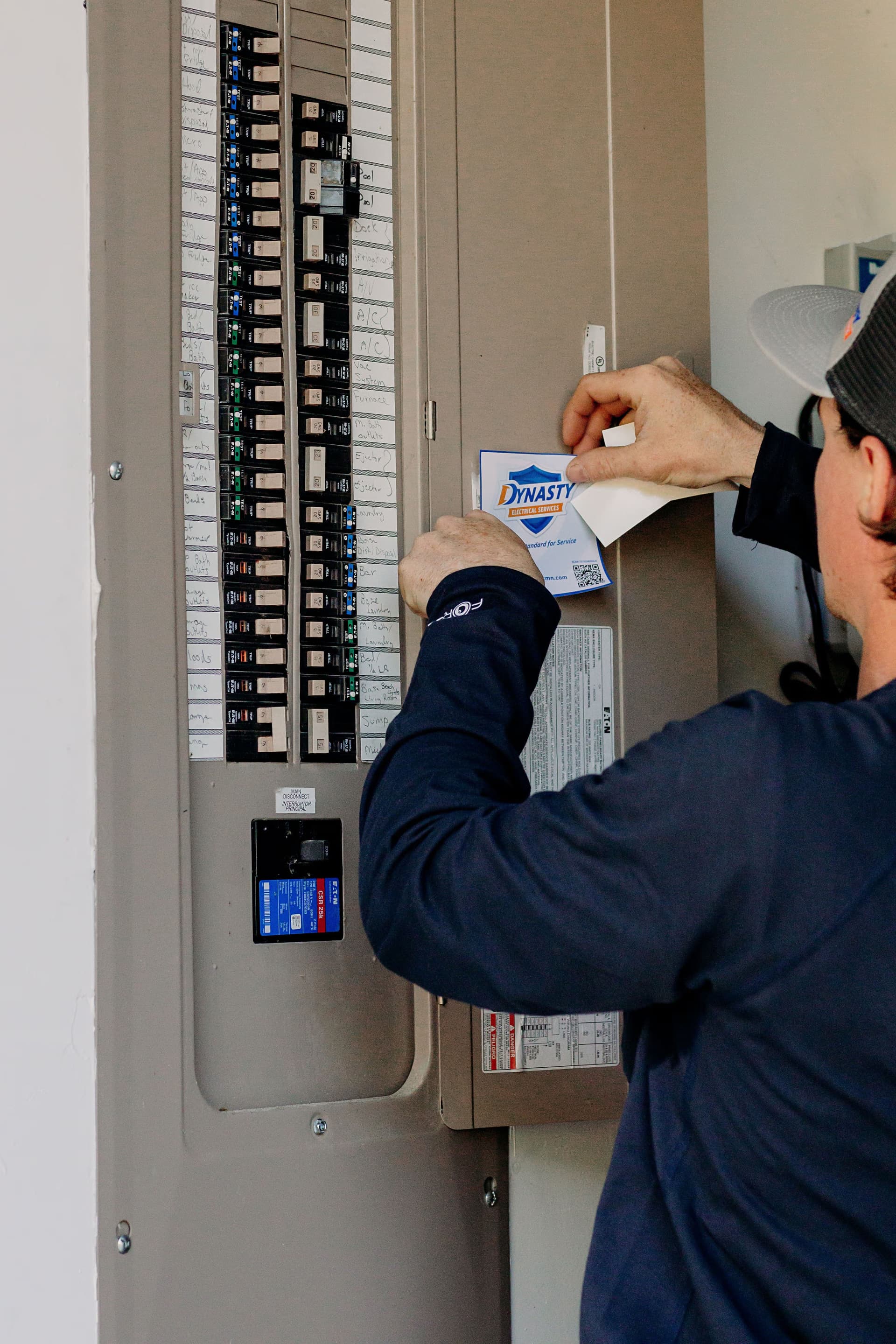
Powering a Radon Mitigation System: A Real-World Call
We recently got a call from a homeowner — let’s call her Kelly — who had a radon mitigation system being installed that very morning. The radon contractor had just told her, “You’ll need an electrician for the power,” and gave her our name.
By the time Kelly called us, the PVC pipe was already going in, the fan location was picked, and she was wondering:
- How is this radon fan actually powered?
- Do I need a special switch or just a plug?
- What does “to code” mean for this kind of system?
- Do I have to be home for the electrician?
We walked Kelly through everything and scheduled her for that same afternoon. If you’re in the same boat, here’s what you need to know before your radon mitigation system gets wired to your electrical panel.
How Radon Mitigation Systems Get Their Power
Every active radon mitigation system has a fan that needs continuous electrical power. In most homes, that fan is:
- Mounted in the attic, garage, or outside, and
- Hard-wired to a circuit that originates in your main electrical panel or subpanel.
On Kelly’s call, we first asked, “Is your system in the attic, garage, or outside?” because the location affects how we route the wiring and what type of disconnect or switch is needed.
In simple terms, our job is to give the radon fan a reliable, code-compliant power source that can be turned off safely for service, without you having to fuss with extension cords or overloaded outlets.
Dedicated Circuit, Switch, or Simple Plug?
This is where most homeowners get confused. Kelly said, “He told me to make sure it was a switch and not a… plug? Am I making sense?” We hear that all the time, because different radon installers prefer slightly different setups.
Here are the common options we review on site:
- Dedicated circuit: In many cases, we install a new, dedicated breaker in your panel just for the radon fan. This helps avoid nuisance tripping and keeps the fan separate from high-demand appliances.
- Hard-wired disconnect or switch: Often required when the fan is in an attic or outside. This gives a clear on/off means of disconnect near the equipment for servicing.
- Receptacle (plug-in) connection: In some setups, the fan is cord-and-plug connected to a nearby outlet that’s on an appropriate circuit. That outlet may still be on a dedicated circuit, depending on code and load.
Which one is “right” depends on:
- Your local electrical code and amendments
- Where the fan is mounted (attic, garage, exterior wall)
- The radon contractor’s design and manufacturer’s instructions
The good news: you do not need to decide this on your own. We coordinate with the radon installer and choose the option that keeps you safe and satisfies code.
What “To Code” Really Means for Radon Systems
On Kelly’s call, we told her, “Everything will be to code. No issues.” But what does that actually mean?
When we say we’re wiring a radon system “to code,” we’re talking about:
- Proper breaker sizing: Matching the circuit breaker to the radon fan’s load and wiring.
- Correct wire type and routing: Using cable or conduit approved for indoor, attic, garage, or outdoor locations, with secure supports and protection from damage.
- Required disconnecting means: Providing an accessible way to shut off power to the fan for maintenance.
- GFCI or other protection, if needed: Depending on where the outlet or connection is located.
- Permits and inspections: Many jurisdictions require an electrical permit and inspection for new circuits and radon fan connections.
In Kelly’s case, we quoted a flat rate that included permits, so there were no surprises. After we finish, an inspector may stop by to verify the work meets local electrical and building codes.
How We Coordinate With Your Radon Installer
By the time Kelly called, her radon installer was already running pipe. She asked, “Does it matter if he’s still working when you arrive?” Our answer: not at all.
We routinely work alongside radon contractors and usually:
- Verify the final fan location and pipe route with them
- Confirm whether they want a switch, disconnect, or receptacle
- Plan the cleanest, shortest electrical path from your panel to the fan
This kind of coordination is normal and helps your whole system look and perform like one integrated installation rather than two separate projects.
Do You Need to Be Home for the Electrical Work?
Kelly’s next question was, “Do I need to be present?” Our answer was, “You don’t need to be home as long as we have access to your electrical panel.”
Every company has its own policy, but in general, here’s what we need:
- Clear access to your electrical panel (no shelves or boxes blocking it)
- Access to the fan location (attic, garage, or outside)
- A contact number so we can reach you if questions come up
Many homeowners prefer to be there, especially if they want to walk through the plan or ask questions. Kelly chose a 2:30 p.m. arrival so she could be home, which worked perfectly.
What to Expect on Installation Day
If you have a radon mitigation system scheduled, here’s what your electrical visit will typically look like:
- Arrival and walkthrough: We confirm the fan location, panel location, and any preferences from you or the radon installer.
- Panel work: We install a new breaker if a dedicated circuit is needed, label it, and prepare the wiring route.
- Running the wiring: We route cable or conduit from the panel to the fan area, following code and keeping things as tidy as possible.
- Fan connection: We install the switch, disconnect, or receptacle and connect the fan according to manufacturer instructions.
- Testing and cleanup: We power up the fan, check operation, and clean up our work area. You’ll know which breaker controls the system and how to shut it off if needed.
After that, if a permit was pulled, you may get a quick visit from the inspector to sign off on the electrical work.
Getting Your Radon System Powered Safely
If your radon installer just told you, “Call an electrician,” you are exactly where Kelly was. You do not need to have all the technical answers — you just need to make sure the electrical side is done safely and to code.
When you schedule with a qualified electrician, be ready to share:
- Where the radon fan will be located
- When the radon installer is scheduled (or if they’re already on site)
- Whether you plan to be home or just provide access to the panel
From there, we take care of the details so your radon system runs quietly in the background, keeping your home safer for years to come.