Do I Really Need to Replace My Electrical Panel?
Wondering if you really need a new electrical panel? Learn safety signs, real-world costs, and when an upgrade makes sense versus a simple repair.
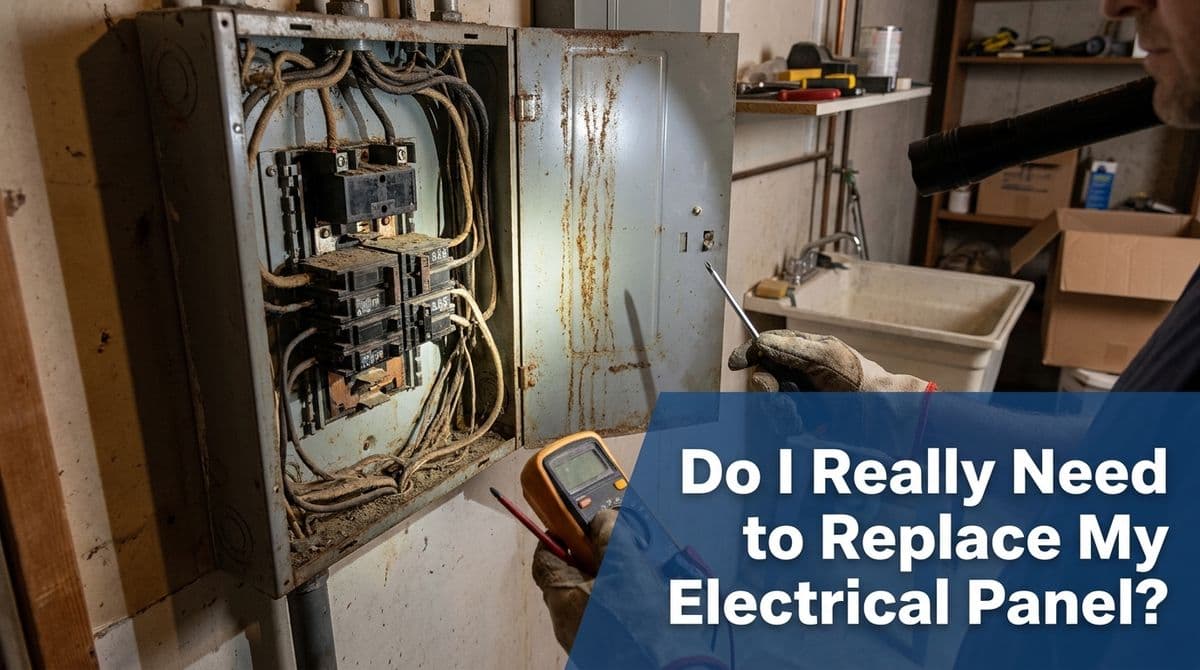
“Do I Really Need a New Panel?” A Call That Started With One Outlet
We recently got a call from a homeowner — let’s call her Emily — while one of our electricians was at her house looking at a dead outlet in the garage.
Our tech had traced the issue back to her main electrical panel and told her, “This might be more than a bad outlet — we may need to look at replacing your panel.” Naturally, Emily’s next question (and probably yours too) was:
“Do I really need to replace the whole thing, and how much is this going to cost me?”
On the phone, we explained that we needed photos and a closer look before giving a solid price. We didn’t want to overpromise or underpromise, especially when panel work is almost always a project in the thousands of dollars. But that conversation is exactly the kind of situation where homeowners feel torn: is this a real safety issue or an upsell?
Let’s walk through how we think about panel replacements, what really drives the cost, and when an upgrade actually makes sense.
What Your Electrical Panel Actually Does (And Why It Matters)
Your electrical panel is essentially the “traffic control center” for all the power in your home. It:
- Receives electricity from the utility
- Distributes it to different circuits (lights, outlets, appliances)
- Protects wires with breakers that trip when there’s a problem
When a simple outlet problem leads us back to your panel, it usually means we’re seeing one or more of these:
- Overheating or burn marks on breakers or bus bars
- Loose or double-tapped connections (two wires under a screw meant for one)
- Corrosion or rust from moisture
- Outdated or recalled equipment that no longer meets code or safety standards
Any of those can turn a “small” issue like a dead outlet into an early warning sign of a bigger problem in the panel.
Signs You May Need to Replace (Not Just Repair) Your Panel
We don’t walk into a home looking to replace a panel. Often, we can fix specific issues. But there are some clear situations where a full replacement is the safest, most sensible option.
1. Your Panel Is Old, Obsolete, or Recalled
If your panel is 30–40+ years old, there’s a good chance it wasn’t designed for today’s electrical loads. Certain brands and styles are known problem children, including:
- Federal Pacific (FPE) panels
- Zinsco/Sylvania panels
- Fuse boxes (screw-in fuses instead of breakers)
These panels have documented issues where breakers don’t trip like they should, which can allow dangerous overheating in the wiring. If we see one of these, we’ll almost always recommend replacement.
2. Visible Damage or Overheating
Things that make us consider a full upgrade:
- Burn marks or melted plastic around breakers
- Buzzing, crackling, or arcing sounds from the panel
- Breakers that feel hot to the touch
- Severe rust, water damage, or corrosion
You might notice repeated tripping on one breaker, lights dimming when big appliances start, or outlets that keep acting up in different parts of the house. Those are all symptoms that something is going wrong at the panel level.
Safety vs. Convenience: When an Upgrade Really Makes Sense
When Emily asked if her situation was urgent, our honest answer was: “We need to see more before we say that.” That’s still the best answer for any specific home. But in general, here’s how we look at urgency.
Likely Urgent Situations
- Smell of burning or melting near the panel
- Scorch marks or blackening around breakers
- Breakers tripping and then refusing to reset
- Panel buzzing, sizzling, or sparking
In these cases, we often recommend turning off affected breakers (or the main, if needed) and having us out as soon as possible. Fire risk is not something to put off.
Likely Non-Urgent But Worth Planning
- Older panel with some nuisance tripping
- Running out of breaker space for new circuits
- Planning a remodel, EV charger, hot tub, or new HVAC
- Insurance company flagging your panel during a home sale or policy change
These are the cases where we’ll say, as we did with Emily, “It doesn’t seem like a drop-everything emergency, but let’s get eyes on it and get you solid pricing so you can make a smart decision.”
What Does a Panel Replacement Cost — And Why Is It “In the Thousands”?
On the phone with Emily, we told her honestly: “It’ll be in the thousands, but we can’t give you an exact number until we see the pictures and details.” That’s not us being vague — it’s because a lot of factors go into the final price.
Key Factors That Affect Panel Replacement Cost
- Panel size and amperage: Upgrading from 100A to 200A costs more in materials and labor.
- Condition of existing wiring: If we can tie into good existing circuits, it’s cheaper than re-running lots of new wire.
- Code updates: Modern code may require things like surge protection, AFCI/GFCI breakers, bonding, or relocating the panel.
- Service upgrade: Sometimes the utility connection and meter base need updating too.
- Access and placement: A clean, open garage panel is faster than a cramped panel buried in a closet.
Most homeowners will see a range that starts in the low thousands and can climb from there with bigger service upgrades or extensive code corrections.
How to Talk About Costs With Your Electrician
Here’s how we recommend approaching the money conversation, whether it’s with us or anyone else:
- Ask for a clear, itemized quote. You should see what’s included: new panel, breakers, permits, labor, code corrections, etc.
- Ask what’s a “must” for safety vs. “nice to have.” Sometimes there’s flexibility on timing of extra work.
- Ask about permits and inspections. Any legitimate panel replacement should be permitted and inspected.
- Ask about warranties. Both on the equipment and on the workmanship.
If a contractor throws out one flat number but can’t explain what’s included or why, that’s a red flag.
When a Repair Is Enough (And When to Plan for Full Replacement)
Not every panel issue means you need a whole new panel today. Often we can:
- Replace a failing breaker
- Tighten loose connections
- Correct double-tapped breakers (two circuits on one breaker)
- Clean up minor corrosion and improve bonding/grounding
We’ll usually give you both options if possible: a repair that keeps things safe in the short term, and a ballpark for a full upgrade if we think your panel is nearing the end of its life. That way you can budget instead of being surprised later.
Not Sure If You Really Need a New Panel?
If you’re in the same boat as Emily — you’ve been told you might need a new panel, but you’re not convinced — the next step is simple: get a thorough inspection and a clear explanation.
We’re always happy to look at photos, talk through what you’re experiencing, and let you know whether it sounds urgent or something you can plan for. The goal isn’t to sell you the biggest project; it’s to keep your home safe and your expectations realistic.
When it comes to electrical panels, the right time to replace is when safety and reliability justify the investment — not just when a single outlet acts up.