Rewiring an Old Home: Knob & Tube, Subpanels, and Code Upgrades
Buying an older home with knob and tube wiring? Learn what rewiring really involves, when you’ll need a subpanel, and how code upgrades affect your budget.
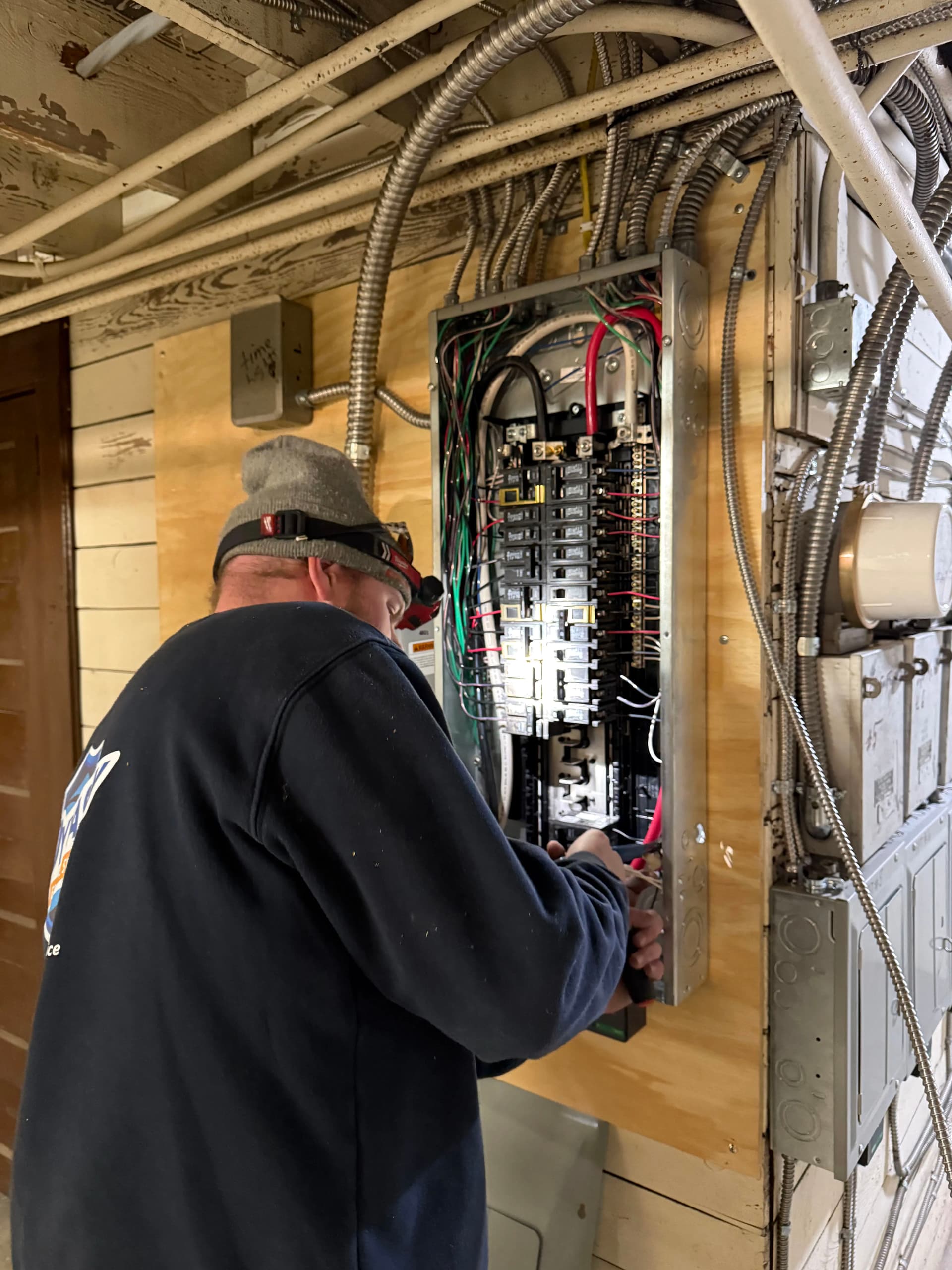
A 1905 Charmer… With 1905 Wiring
We recently got a call from a real estate agent — let’s call her Kelly — who was helping buyers with a 1905 home, about 1,000 square feet. It had all the curb appeal they wanted… and a whole lot of knob and tube wiring behind the walls.
The seller had an existing quote from another electrician that called for replacing knob and tube feeding about 10 lights, 11 switches, 2 outlets, adding a subpanel because the 2015 main panel was already full, adding living and dining room outlets, removing some surface wiremold, fishing new wiring through the walls, and running power to the garage for a door opener. Kelly’s questions were the same ones we hear from a lot of homebuyers:
- “Is this really a whole-house rewire?”
- “Why do we need a subpanel if there’s already a newer panel?”
- “What exactly has to be brought up to code when we start?”
- “How invasive is this going to be to the walls and ceilings?”
If you’re considering buying an older home, especially one with knob and tube, let’s walk through how we approach situations like this and what you should know before you close.
What Knob and Tube Wiring Really Means for Buyers
Knob and tube (often shortened to K&T) was common from the late 1800s into the early 1900s, so a 1905 house is right in that sweet spot. On paper, knob and tube isn’t automatically dangerous just because it’s old, but it creates a few big issues for modern living:
- No grounding: Most K&T systems don’t have a ground wire, which means less protection for people and sensitive electronics.
- Modern loads, old wiring: Homes in 1905 weren’t built for today’s appliances, TVs, computers, and chargers. Circuits can be undersized or overloaded.
- Insulation conflicts: K&T was designed to be in open air. Burying it under insulation (common in retrofits) can be a fire concern.
- Insurance headaches: Some insurers charge more, limit coverage, or refuse to insure homes with active knob and tube.
In Kelly’s case, the kitchen and a small powder room had already been updated, but the rest of the house still relied on older wiring. That’s typical: kitchens and baths usually get new circuits when they’re remodeled, but bedrooms, hallways, and living spaces often get left behind.
When Replacing “Some” Wiring Becomes a Whole-House Rewire
On the call, we talked through the other electrician’s scope. On the surface, it listed 10 lights, 11 switches, and 2 outlets on knob and tube. That doesn’t sound like the entire house, but here’s the catch: in old homes, circuits are often tied together in ways that don’t match today’s standards.
We explained to Kelly that once we start opening up devices and circuits, we frequently find:
- Lights in one room tied to outlets in another
- Old wiring feeding newer additions
- Multiple rooms daisy-chained on one small circuit
So when you “just” replace the visible knob and tube, you often end up tracing, separating, and rerouting circuits throughout the house. That’s how a project that starts out as “partial rewire” turns into what is effectively a whole-house rewire of everything except already-updated areas.
Why an Older Home May Need a Subpanel
Kelly asked a smart question: if the home already had a new panel installed in 2015, why was the other electrician calling for a subpanel?
Newer doesn’t always mean larger. Many older homes that were “updated” in the last decade still only have a 100-amp service and a panel that’s already full. When you start doing a proper rewire to today’s code, you often need:
- More circuits (to separate lighting, outlets, and dedicated loads)
- Arc-fault and/or ground-fault protection, which can take more breaker spaces
- Room for future needs (EV chargers, hot tubs, mini-splits, etc.)
If the existing panel is full or poorly laid out, we have two main options:
- Replace the main panel with something larger and better organized
- Add a subpanel off the existing main to pick up the new circuits
Which route we recommend depends on the service size, panel condition, and your long-term plans. A subpanel can be a cost-effective way to get more circuit space during a rewire without redoing the entire service.
“Once You Touch It, You Need to Bring It Up” – What Code Upgrades Really Mean
One important thing we told Kelly is something most buyers don’t hear clearly enough: once we start working on an older system, we’re required to bring the work we touch up to current electrical code.
That doesn’t mean your entire home magically has to be 2026-new-construction perfect. It does mean:
- Any new wiring we install must meet current standards for wire size, grounding, and overcurrent protection.
- Areas like kitchens, bathrooms, laundry, and exterior outlets need proper GFCI and often AFCI protection.
- We may need to add outlets so you’re not over-relying on extension cords and power strips, especially in living and dining rooms.
In Kelly’s project, that’s why the quote mentioned adding outlets in the living and dining rooms and removing surface-mounted wiremold in favor of wiring run inside the walls. That’s about safety and code compliance, but it also makes the house more functional for everyday life.
Fishing Wires vs. Opening Walls: How Invasive Is a Rewire?
One of Kelly’s concerns was how much damage would be done to the home’s plaster walls and ceilings. We were honest: rewiring an old house without a full gut is labor-intensive. There’s a lot of “fishing” involved — carefully snaking new wire through existing cavities, using small access holes where needed.
Here’s how we typically approach it in lived-in or historically sensitive homes:
- Minimize openings: We use existing chases, closets, and attic/basement spaces whenever possible.
- Strategic access holes: When we must cut, we do it in locations that are easier to patch and paint.
- No patching in our scope (unless specified): Like the quote Kelly read to us, most electrical rewires don’t include drywall or plaster repair. That’s usually handled by a painter or handyman afterward.
If you’re budgeting for a rewire, always plan for some wall and ceiling repair. We can keep it reasonable, but there’s no way to completely modernize 120-year-old wiring with zero disturbance.
Practical Tips for Homebuyers Looking at Old Wiring
If you’re in the same boat as Kelly’s buyers, here are a few steps we recommend before you remove contingencies:
- Get an electrician’s walkthrough before you close, not after. A quick visual and panel inspection can tell you if you’re looking at minor upgrades or a major rewire.
- Ask specifically about knob and tube: Is it active, partially abandoned, or fully removed? What areas does it still serve?
- Review the panel size and capacity: Is it 60A, 100A, 150A, or 200A? Are there open spaces for new circuits?
- Get a written scope, not just a price: Itemize what’s being rewired, whether a subpanel is included, and what—if any—patching is covered.
- Talk to your insurance agent about how existing knob and tube or a rewire-in-progress might affect coverage.
Thinking About Buying an Older Home? We Can Help
We love old houses; we just don’t love old wiring. If you’re considering a home with knob and tube, a full or partial rewire, or you’ve been told you need a subpanel, we’re happy to walk the property with you, explain what’s really going on, and put together a clear, realistic plan.
A little expert input before you sign can help you negotiate repairs, budget accurately, and move in with a lot more peace of mind — and a lot fewer surprises hiding in the walls.