Home EV Charger Installation 101 for Tesla Owners
Thinking about a Tesla Wall Connector at home? Learn how breaker size, wire gauge, and permits affect charging speed, safety, and installation cost.
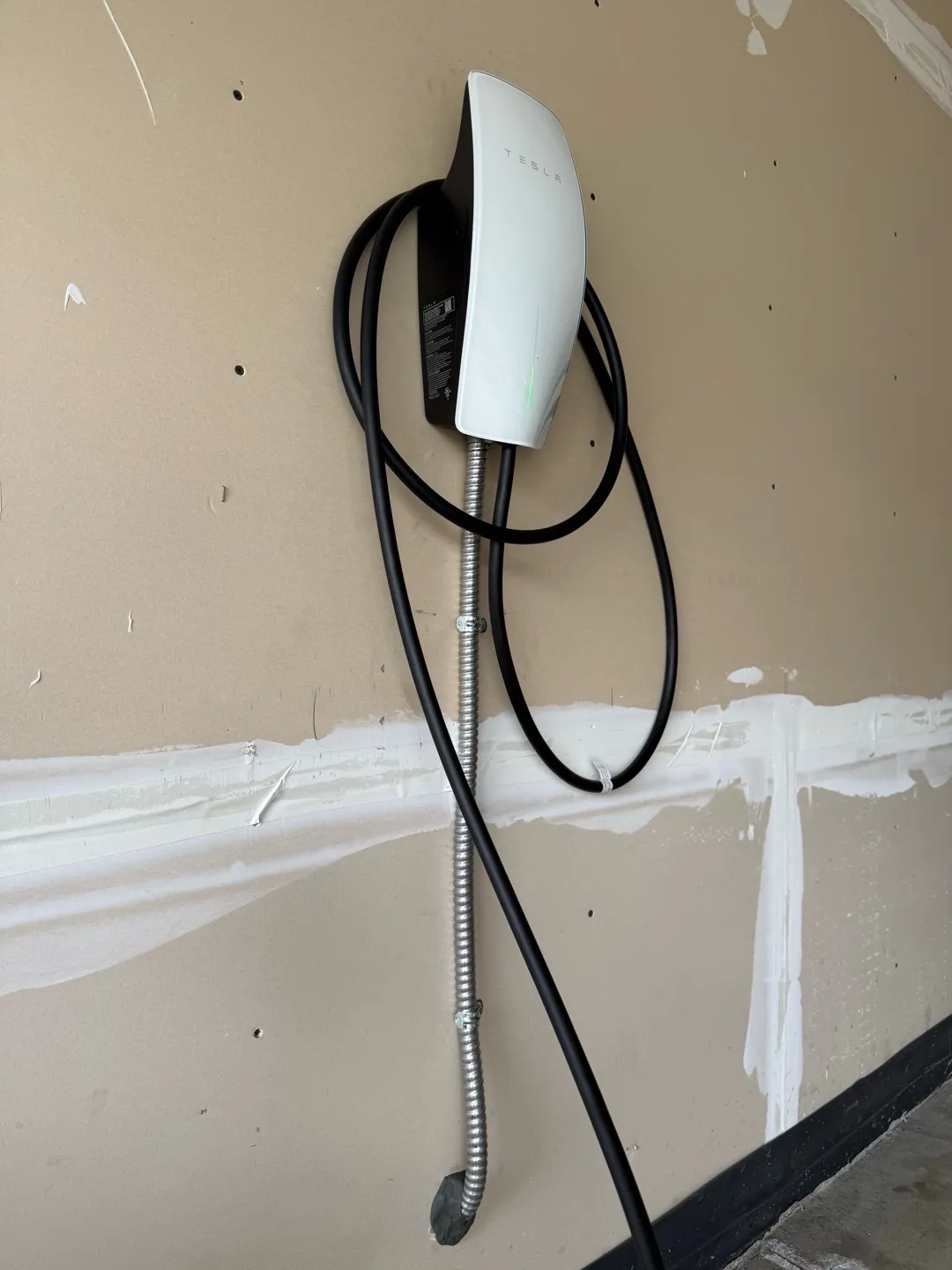
We recently got a call from a customer — let’s call him Mark — who had just bought a Tesla and was excited to get a wall connector installed in his garage. The previous homeowner had already run a line to the garage on a 30-amp breaker, so Mark was hoping it would be a simple, low-cost hook-up.
As we talked through his setup, we explained that while a 30-amp circuit is great for some Level 2 chargers, a Tesla Wall Connector is usually designed to take advantage of a 60-amp circuit for faster charging. That led to the big questions we hear all the time: What size circuit do I really need? Is my wire big enough? And how does all of this affect charging speed and cost?
Why a Tesla Wall Connector Usually Needs a 60-Amp Circuit
Most Tesla Wall Connectors are set up to deliver up to 48 amps of charging power. By code, continuous loads (like EV charging) can only use 80% of a breaker’s rating. That’s why we typically install them on a 60-amp breaker:
- 60 amps × 80% = 48 amps available for charging
- More amps = faster charging, especially if the battery is low
In Mark’s case, the existing 30-amp breaker meant his charger would have to be dialed back to around 24 amps or less. That’s fine for overnight top-ups, but it’s noticeably slower if he regularly arrives home with a low battery or takes lots of road trips.
So the first decision we help homeowners make is: Do you want to save upfront by using your existing circuit, or invest in a new 60-amp circuit to get full Tesla charging speed?
Wire Size: Why Your Existing Circuit Might Not Cut It
During our call with Mark, we explained that you can’t just swap a 30-amp breaker for a 60-amp breaker and call it a day. The wire size has to match the new amperage, or you create a fire hazard.
Here’s the general idea (actual sizing can vary by code, distance, and wire type):
- 30-amp circuit: Usually #10 copper or #8 aluminum
- 50–60-amp circuit: Typically larger wire, such as #6 copper or specialized MC cable sized for EV loads
In many garages we inspect, the existing 30-amp circuit was originally installed for a dryer, small welder, or basic Level 2 charger. That usually means the wire is simply too small to safely upgrade to 60 amps. When that happens, we have to:
- Run new properly sized wire from the main panel to the charger location
- Install a new breaker matched to that wire size
- Set the wall connector to the correct maximum current
We often use a specific type of MC cable that’s rated and labeled for EV charger circuits. It’s safe, code-compliant, and handles the continuous load of overnight charging.
How Circuit Size Affects Tesla Charging Speed
For most Tesla owners, “How fast will it charge?” is the number one concern. The answer depends directly on the available amperage of the circuit. Roughly speaking, more amps = more miles of range added per hour.
Very generally (actual numbers vary by model):
- 30-amp circuit (24A charging): Good for light daily driving; overnight is usually enough to refill 30–40 miles of use.
- 50-amp circuit (40A charging): A solid middle ground for most homeowners.
- 60-amp circuit (48A charging): Lets the Tesla Wall Connector run near its maximum speed, ideal for heavy commuters or multi-driver households.
When we walked Mark through these options, he realized he could use his existing 30-amp circuit and save money now, but he’d be trading away some charging speed. For homeowners who only drive locally and can leave the car plugged in overnight, that’s often totally fine. For others, a full 60-amp install is worth the investment.
Cost Ranges: Simple Hook-Up vs. New Circuit
We’re always upfront that EV charger pricing depends heavily on your home’s layout and electrical system. On Mark’s call, we broke it down like this:
- If the correct wire is already there: Hooking up the Tesla charger and pulling the required permit is usually around $400–$500 in our market, assuming everything is up to code.
- If you need a new circuit run: A typical new 60-amp EV circuit with new wire from the panel to the garage usually falls in the $1,100–$1,500 range.
- Complex installs: Very long wire runs, finished basements, detached garages, or adding two chargers can push projects into the several-thousand-dollar range.
There’s no one-size-fits-all price tag, which is why we always start with a site visit and written estimate before we schedule the actual installation.
Permits, Inspections, and Why They Matter
For Mark — and every EV customer — we also explain the paperwork side. A Tesla Wall Connector is a permitted electrical job in almost every jurisdiction:
- We pull an electrical permit with the city or county
- We install the circuit and charger to current NEC and local code
- An inspector typically visits to verify safety and compliance
Permits and inspections protect you in several ways:
- They help keep your home and family safe from overloaded wiring
- They preserve your home insurance coverage for electrical fires
- They provide documentation when you sell your home
We build permitting into our estimates so there are no surprises.
What to Do Before We Come Out for a Site Visit
When Mark asked about scheduling, we set up a free estimate visit first. That first trip lets us see the panel, measure the run to the garage, and check the existing wire. Homeowners can make that visit smoother by doing a few simple things:
- Clear access to your main electrical panel and garage wall where you want the charger.
- Have your Tesla Wall Connector on-site, if you’ve already purchased it.
- Know where you usually park so we can place the charger and cable in the most convenient spot.
- Be ready to discuss driving habits (daily miles, trips, multiple EVs) so we can recommend the right circuit size.
After that visit, we provide a clear written proposal and, once you approve it, schedule the installation — often within about a week, depending on workload and permit timing.
Tesla Wall Connector vs. Other Level 2 Chargers
While Mark already owned a Tesla, we also work with homeowners who are considering other EVs or mixed-EV households. A few quick points we share:
- Tesla Wall Connector: Integrates smoothly with Tesla vehicles, supports load sharing for multiple Teslas, and can be adjusted to different circuit sizes.
- Other Level 2 chargers: Often work well on 40- or 50-amp circuits and use the J1772 connector; great if you have or may buy a non-Tesla EV.
From an electrical standpoint, the same basics apply: we size the breaker and wire to match the charger’s maximum draw and your home’s panel capacity.
Is Your Home Ready for a Tesla Charger?
Whether you’re like Mark with an existing 30-amp line or you’re starting from scratch, the key pieces are always the same: panel capacity, circuit size, wire gauge, charging speed, and permits. Our job is to walk through those details with you and design a solution that fits how you actually use your car — not just what looks good on paper.
If you’re thinking about a home Tesla charger, the best next step is a quick on-site evaluation. We’ll check your panel, look at your wiring, talk through your driving habits, and give you clear options so you can decide whether a simple hook-up or a full 60-amp install makes the most sense for your home.