New Electric Water Heater Circuit Installation in South Minneapolis
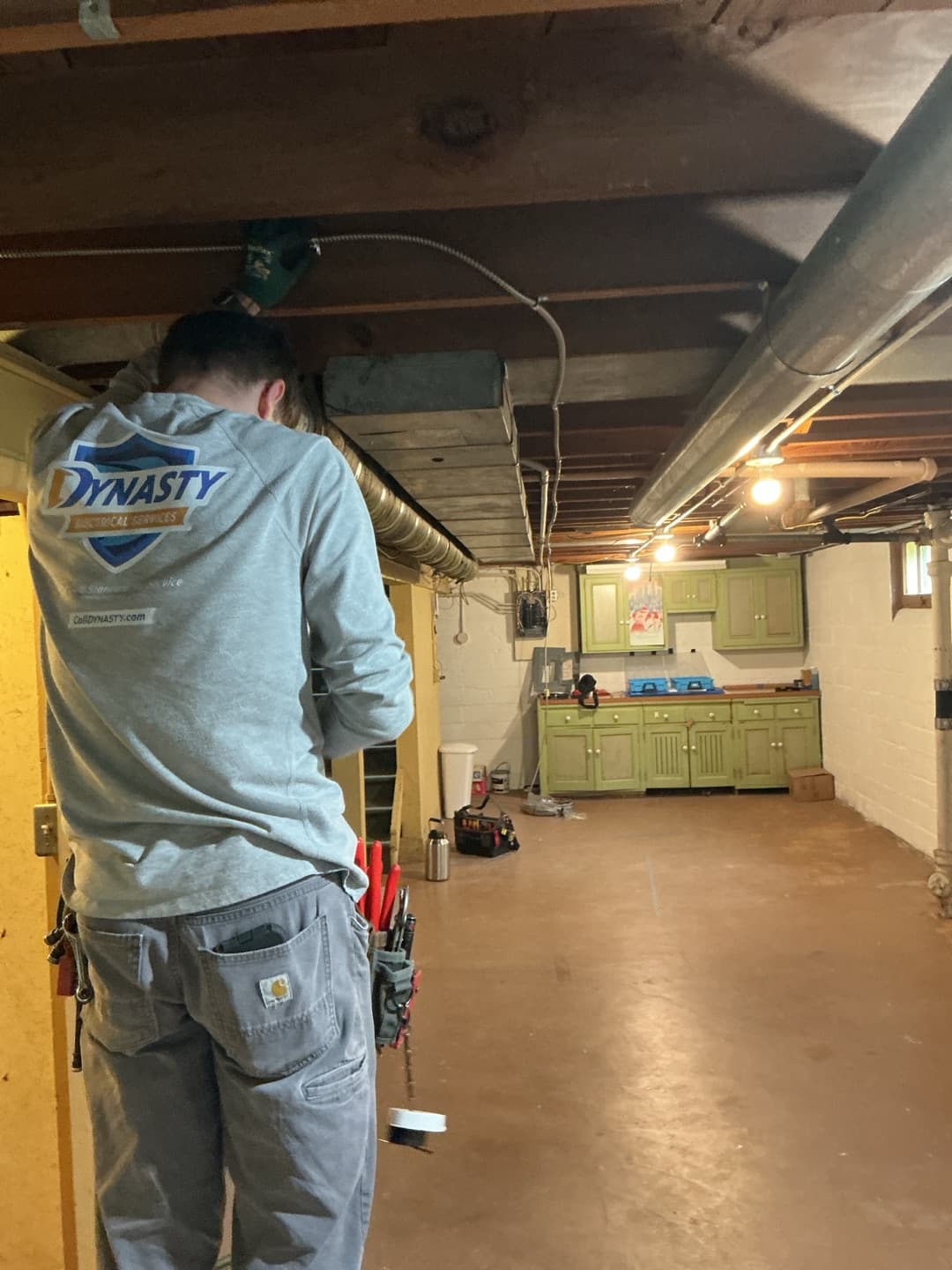
Switching from gas to electric appliances is one of the most common upgrades we see homeowners tackling right now. And while the appliance swap itself seems straightforward, the electrical side of things is where most people hit a wall. A new electric water heater needs a dedicated circuit - and getting that circuit run correctly takes real planning.
That's exactly what Michael is doing here. Before a single wire gets pulled, he's mapping out the path of least resistance through the basement. That means looking at where the panel is, what's already running through the joists, and how to get the new circuit run cleanly without tearing everything apart. It's a step a lot of people skip - and it's the step that separates a clean install from a messy one.
Older South Minneapolis homes are full of character, but the basements can be a puzzle. Existing ductwork, pipes, and conduit all have to be worked around. Taking that time upfront to think it through means the final wire run looks intentional - not like an afterthought.
If you're making the switch from gas to electric - whether it's a water heater, a dryer, a range, or anything else - the electrical work underneath that swap matters more than most people realize. The right circuit, the right breaker size, installed correctly. That's what keeps things safe and up to code.