Radon Fan Dedicated Circuit Wired Up in Plymouth MN
Radon is one of those things most homeowners don't think about until they have to. It's colorless, odorless, and it builds up quietly - especially in Minnesota homes with basements. Once a radon mitigation system gets installed, though, it needs a proper dedicated circuit to run safely and reliably. That's exactly what Koby tackled on this one.
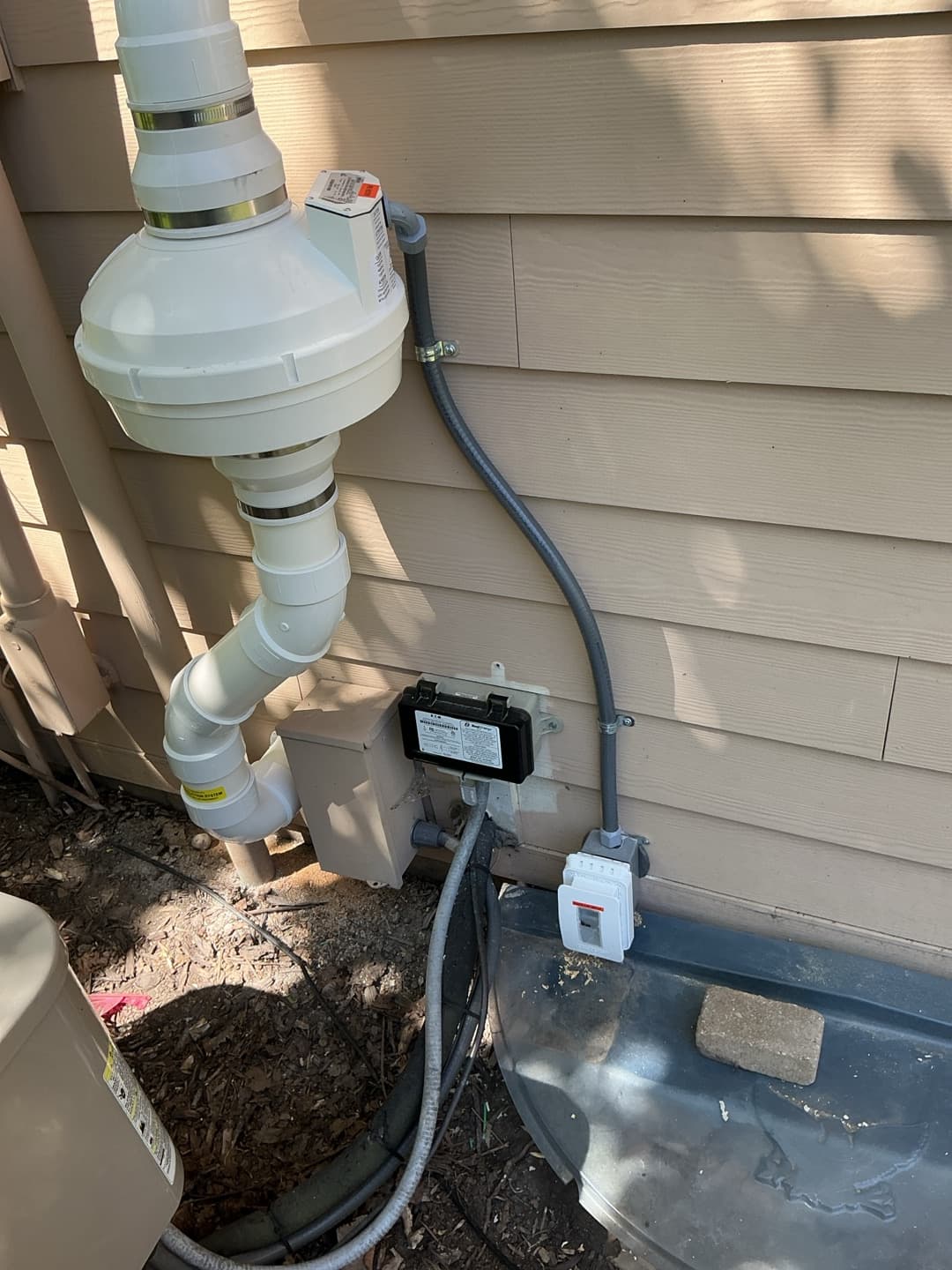
Here's what we were working with - a radon fan mounted on the exterior of the home, plumbed through PVC and ready to run. The fan itself handles the heavy lifting of pulling radon gas out from under the foundation and venting it outside. But none of that matters if the electrical side isn't done right. A radon fan runs continuously, which means it needs its own dedicated circuit - not a shared line that could get overloaded.
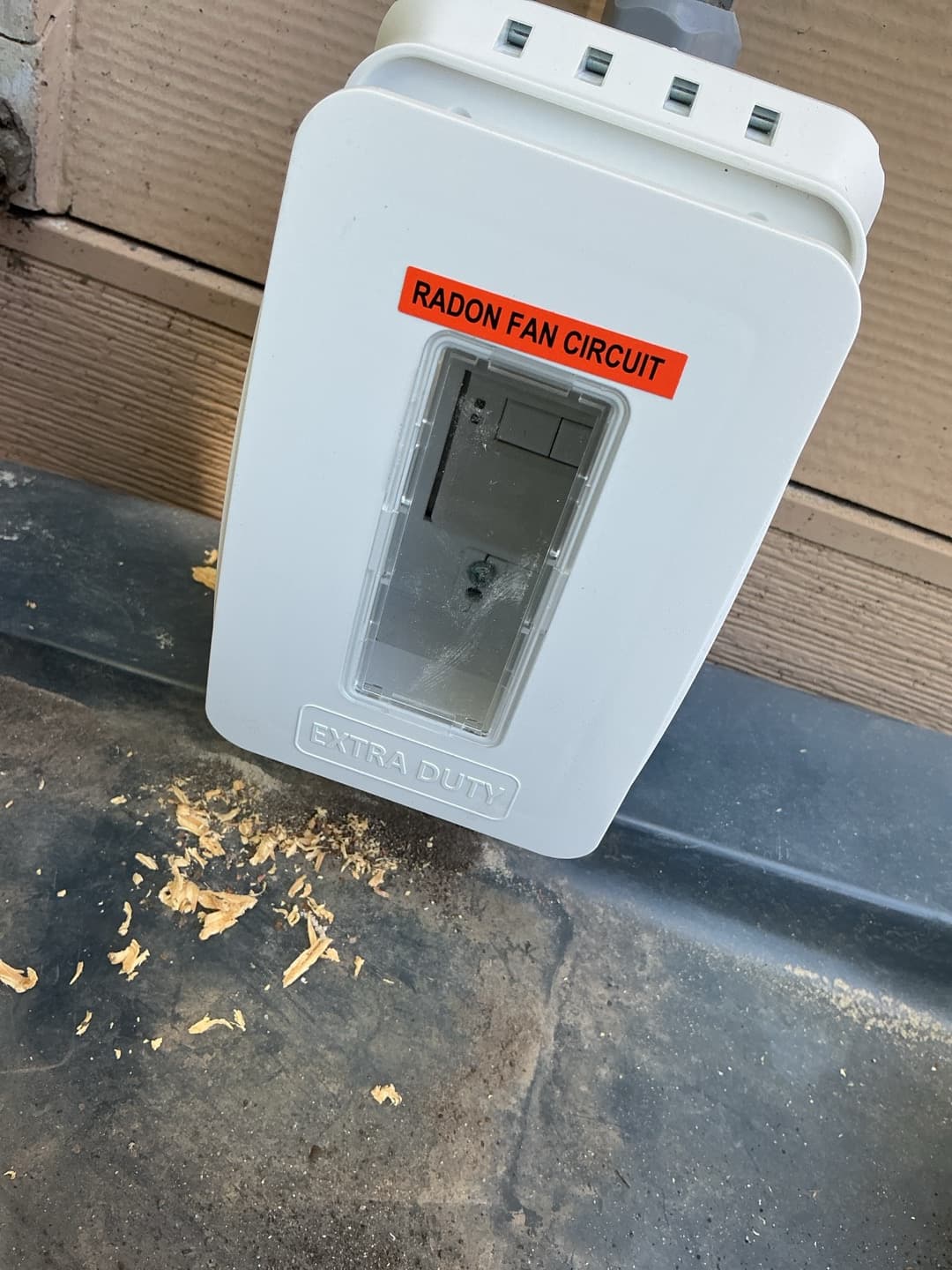
We ran conduit along the siding, tied into a weatherproof disconnect box mounted right at the fan, and labeled everything clearly. The outlet box is rated for exterior use, the wiring is protected, and the whole setup is clean and code-compliant. That orange "Radon Fan Circuit" label on the breaker? That's not just for looks - it makes sure anyone working on the panel down the road knows exactly what that circuit is for. No guessing, no mistakes.
This is the kind of work that doesn't always get a lot of attention, but it matters. A radon fan that trips a breaker or shares power with other devices isn't doing its job. Dedicated circuits exist for a reason - they keep critical equipment running the way it's supposed to, without interference. Whether it's a radon system, a sump pump, or any other piece of equipment that runs around the clock, a dedicated circuit is the right call every time.
Koby did solid work on this one. Clean install, proper materials, and a setup that will keep this Plymouth home safer for the long haul. That's the standard we hold ourselves to on every job.